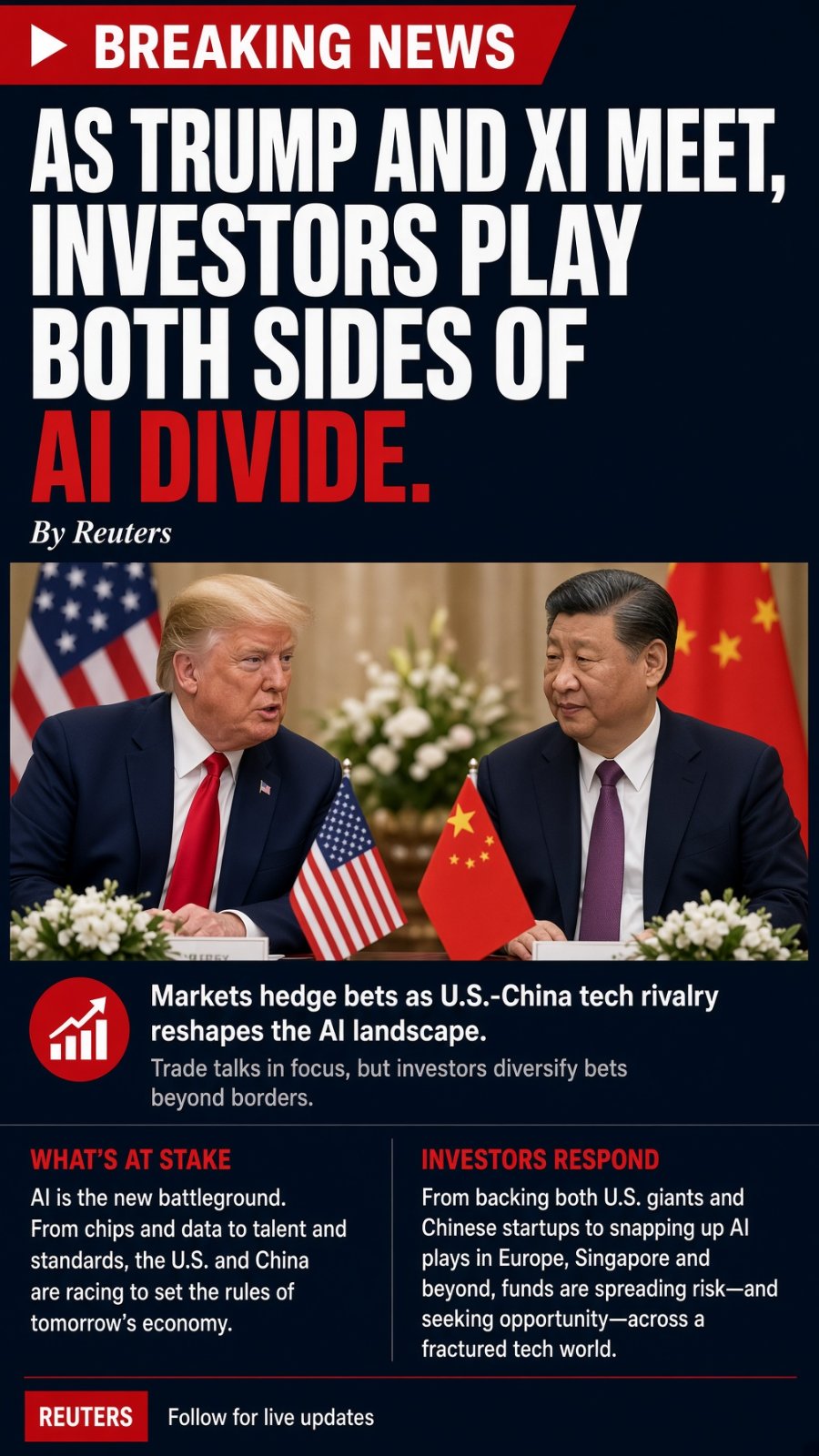
Global investors are increasingly adopting a two-sided approach to artificial intelligence exposure, spreading capital across companies in both the United States and China even as geopolitical tensions between the superpowers create significant uncertainty about the sector’s future trajectory.
The investment strategy reflects a calculation that maintaining positions in AI firms across both economies offers better risk-adjusted returns than betting on a single national champion or ecosystem. Investors acknowledge the potential for further US restrictions on technology exports to China and the possibility of Chinese retaliatory measures, yet remain convinced that both markets will continue advancing AI capabilities independently.
Semiconductor supply chains and data access remain among the most sensitive areas for potential disruption. The ability of Chinese companies to source advanced chips and the openness of US markets to Chinese investment could shift significantly depending on the outcome of high-level diplomatic discussions and the policy directions each government chooses to pursue.
Industry analysts note that previous instances of technology sector bifurcation have created opportunities for investors able to navigate regulatory changes while maintaining diversified exposure. The current moment, however, carries different risks given AI’s foundational importance to economic competitiveness and national security in both nations.
Some investors are positioning themselves across multiple layers of the AI value chain—from semiconductor manufacturers to software companies to specialized chip designers—to reduce their exposure to any single pressure point. Others are focusing on multinational firms with operations in both countries, betting that such businesses can adapt to shifting regulatory environments.
The uncertainty extends beyond tariffs and export controls to questions about data governance, intellectual property protection, and the regulatory treatment of AI applications in different sectors. Both the United States and China have signaled intentions to regulate AI development, though the specific requirements and timelines remain unclear.
Market participants acknowledge that a deterioration in US-China relations could force a significant reallocation of capital away from diversified AI portfolios toward purely domestic options. Conversely, if diplomatic engagement yields agreements on technology sharing or reduced trade barriers, concentrated bets on the companies with the strongest competitive positions could offer outsized returns.