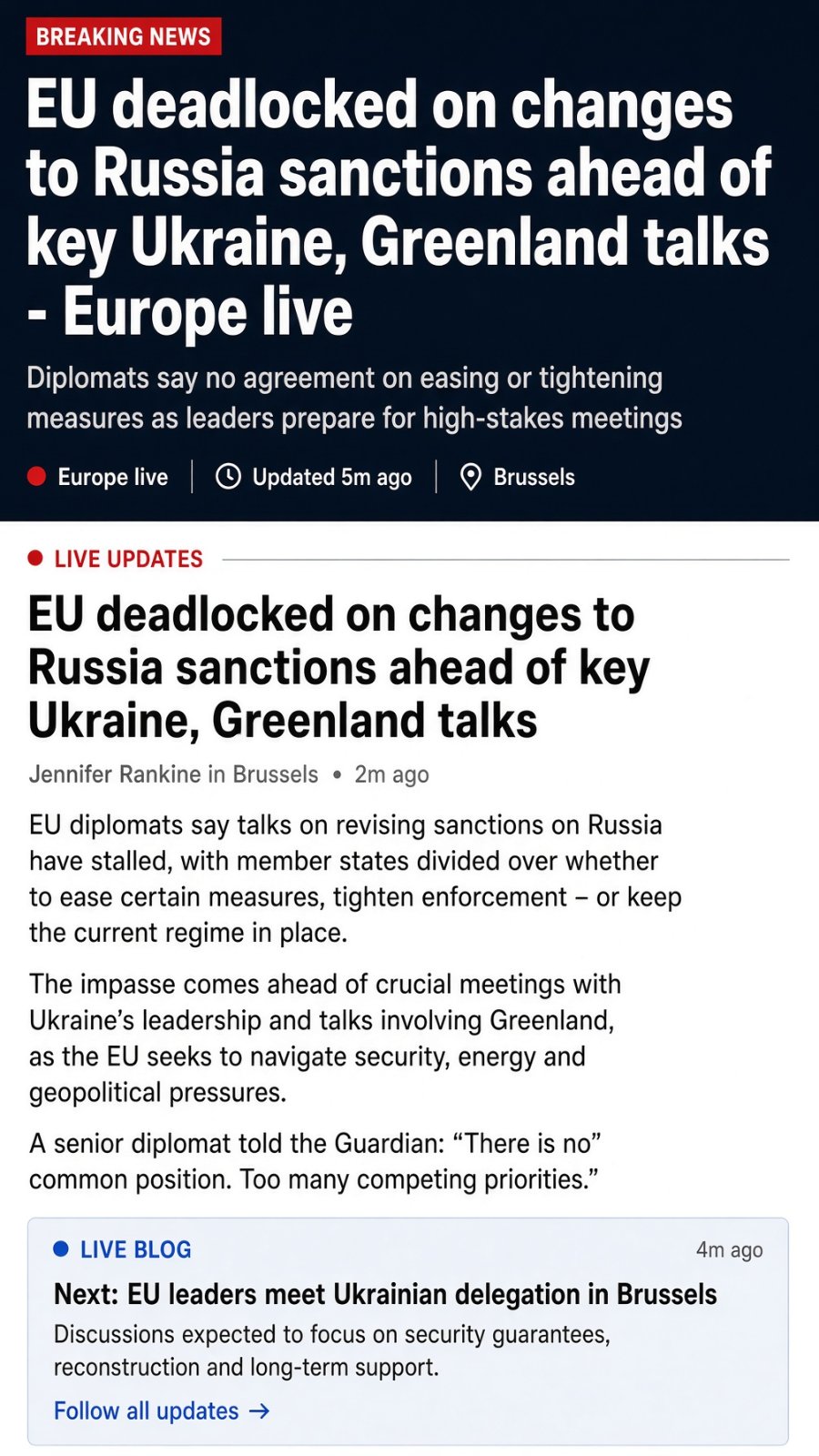
The European Union is grappling with deep divisions over potential changes to its sanctions regime against Russia, unable to forge a unified position as critical diplomatic talks loom on Ukraine and other strategic matters.
The disagreement among member states reflects longstanding tensions within the bloc over balancing security imperatives with economic concerns. Some EU nations have indicated openness to reviewing certain restrictions, while others maintain that lifting or substantially modifying sanctions would undermine the bloc’s response to Russian actions. The deadlock has prevented the EU from presenting a coordinated stance ahead of planned negotiations.
The complexity is compounded by the interconnected nature of the discussions. Talks scheduled to address Ukraine and broader regional security cannot be cleanly separated from the sanctions question, forcing EU leaders to navigate multiple fronts simultaneously. This convergence has intensified pressure on national governments, each weighing their own economic vulnerabilities and political positions.
Historically, the EU’s sanctions architecture has required unanimous approval, meaning a single member state can block modifications. This procedural reality has become a flashpoint as the bloc attempts to reach consensus. Some nations argue that current measures are insufficient, while others contend that their economic impact is unsustainable without concrete diplomatic progress.
Energy dependence, trade relationships, and financial exposure differ markedly across member states, creating genuine divergence in how sanctions costs are distributed. The debate also extends to questions about the conditions under which sanctions might be eased and what concessions or developments would justify such moves.
European capitals are expected to continue negotiations in coming weeks. The outcome could shape not only the EU’s approach to Russia but also its credibility in multilateral diplomacy and its ability to maintain internal cohesion on foreign policy matters.