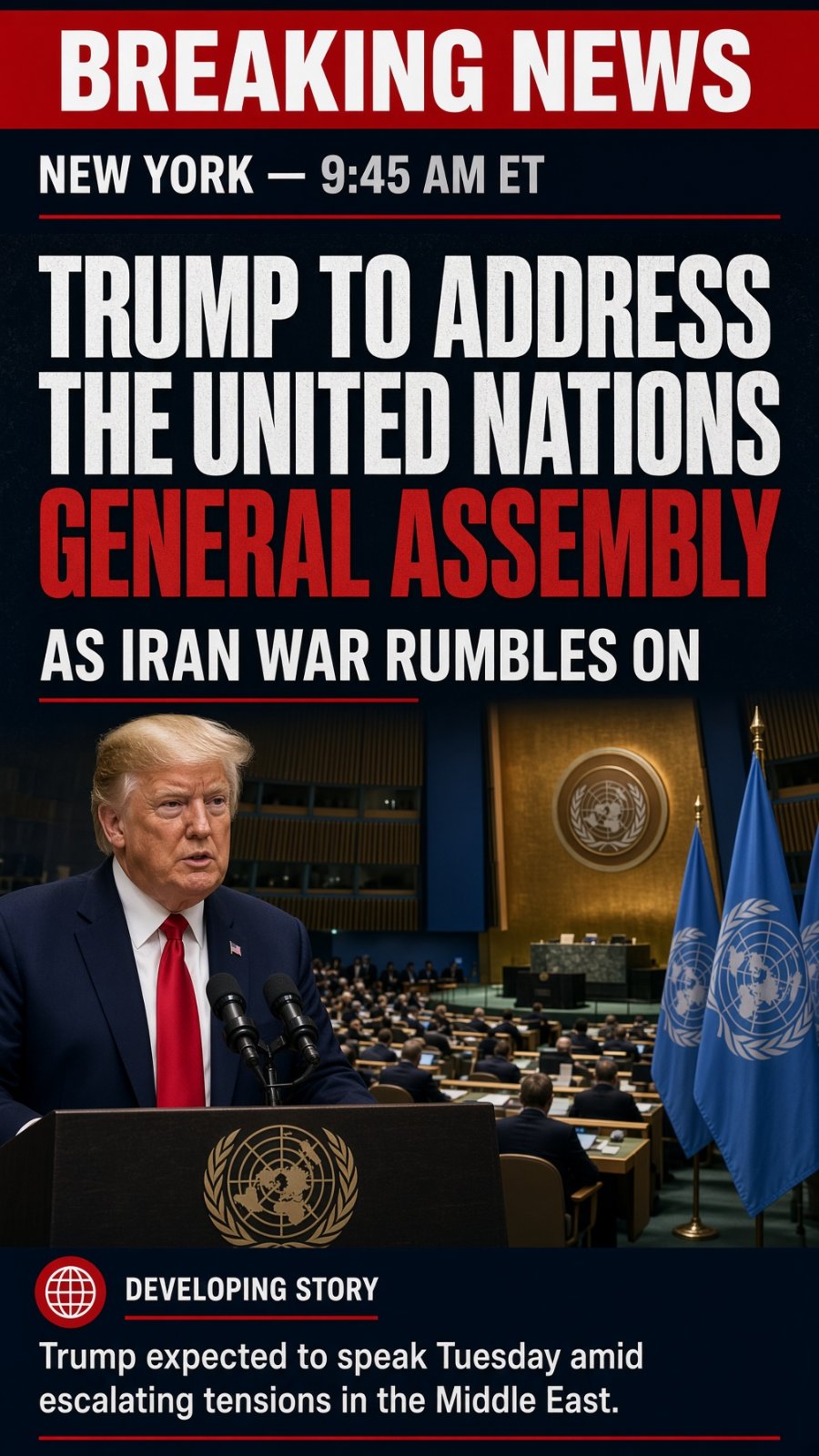
Former President Donald Trump is slated to deliver remarks before the United Nations General Assembly against a backdrop of renewed hostilities in the Middle East involving Iran.
The address represents a notable moment for a former U.S. president to use the global platform, highlighting the continued prominence of Trump within political discourse and his engagement with international affairs. His appearance at the UN underscores the attention surrounding American foreign policy in the region, particularly as military tensions between Washington and Tehran show no signs of immediate resolution.
The ongoing Iran situation has dominated regional headlines, with military activities and retaliatory exchanges marking recent weeks. The conflict has drawn international scrutiny and concern over potential broader destabilization of the Middle East, affecting global energy markets, humanitarian conditions, and diplomatic relationships across multiple continents.
Trump’s approach to Iran during his presidency was marked by a harder line, including withdrawal from the multilateral nuclear agreement negotiated by the preceding administration. His rhetoric and policy choices toward Tehran drew both domestic support and international criticism, framing a sharp contrast with subsequent diplomatic efforts attempted by other administrations.
The UN General Assembly provides a venue where world leaders traditionally outline their nations’ positions and priorities. Trump’s participation in these proceedings, despite no longer holding executive office, reflects his status as a significant voice in American politics and his continued focus on foreign policy questions, particularly those touching on military strength and national security.
The assembly’s proceedings come at a moment when international attention on the Middle East remains high, with delegations from numerous nations present to address the broader geopolitical situation. Trump’s specific remarks and their reception from the global community will likely influence perceptions of future American direction on Iran policy and broader Middle Eastern strategy.