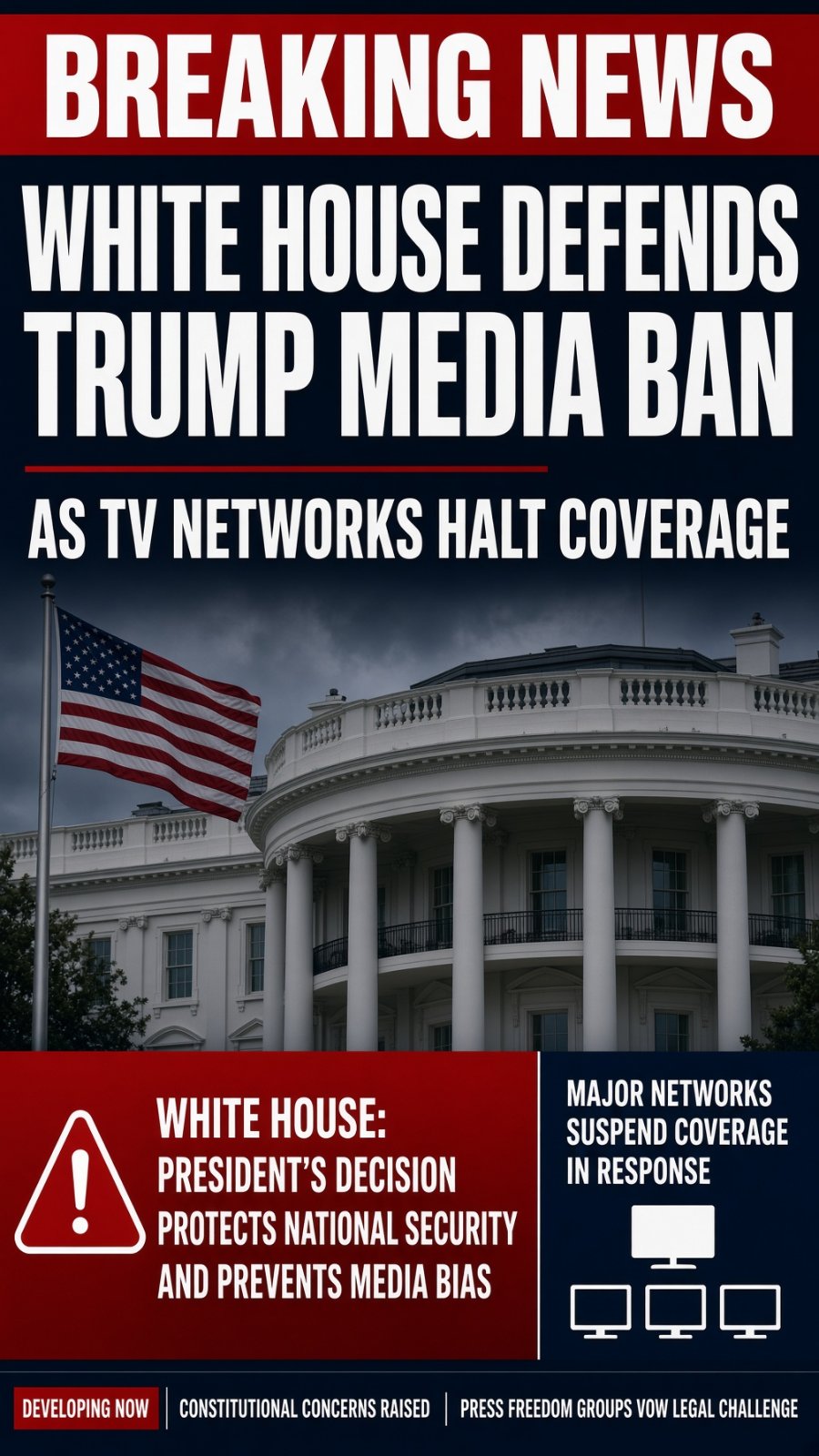
The White House on Tuesday defended its decision to restrict media access for certain television networks, maintaining that the limitations serve legitimate administrative and communications purposes. Officials characterized the measure as a routine exercise of executive discretion over who receives credentials and access to official events and briefings.
The announcement of the restrictions coincided with decisions by major television networks to reduce their coverage of related developments, a parallel shift that raised questions about the relationship between the two actions. Network executives indicated that editorial and resource allocation decisions factored into their choices, citing audience metrics and news priorities.
The dispute reflects longstanding tensions between the White House and sections of the press corps. Access to official events, briefings, and sources has long been a flashpoint in executive-media relations, with officials arguing that credentials and access are privileges rather than guaranteed rights, while news organizations counter that restrictions impede their ability to inform the public.
Media law scholars have noted that while the government has broad authority to manage its own events and spaces, sustained or selective denial of access can create practical obstacles for news gathering. The scenario raises questions about whether restrictions are applied consistently or targeted toward particular outlets based on editorial coverage.
The networks’ simultaneous decision to scale back coverage introduces a separate variable. Programming decisions at major broadcasters typically reflect audience demand, advertising considerations, and editorial judgment about newsworthiness—factors that exist independent of access disputes. Whether the timing reflects a direct response to restrictions, a coincidental shift in editorial priorities, or strategic coordination remained unclear.
Press freedom advocates have characterized media access disputes as emblematic of broader erosion in government transparency and accountability. They argue that restrictions, regardless of stated rationale, narrow the range of voices able to cover official activities and hold institutions accountable.
The White House indicated it would continue its current approach to media credentials and access, framing the policy as consistent with past practice and necessary for operational management.
