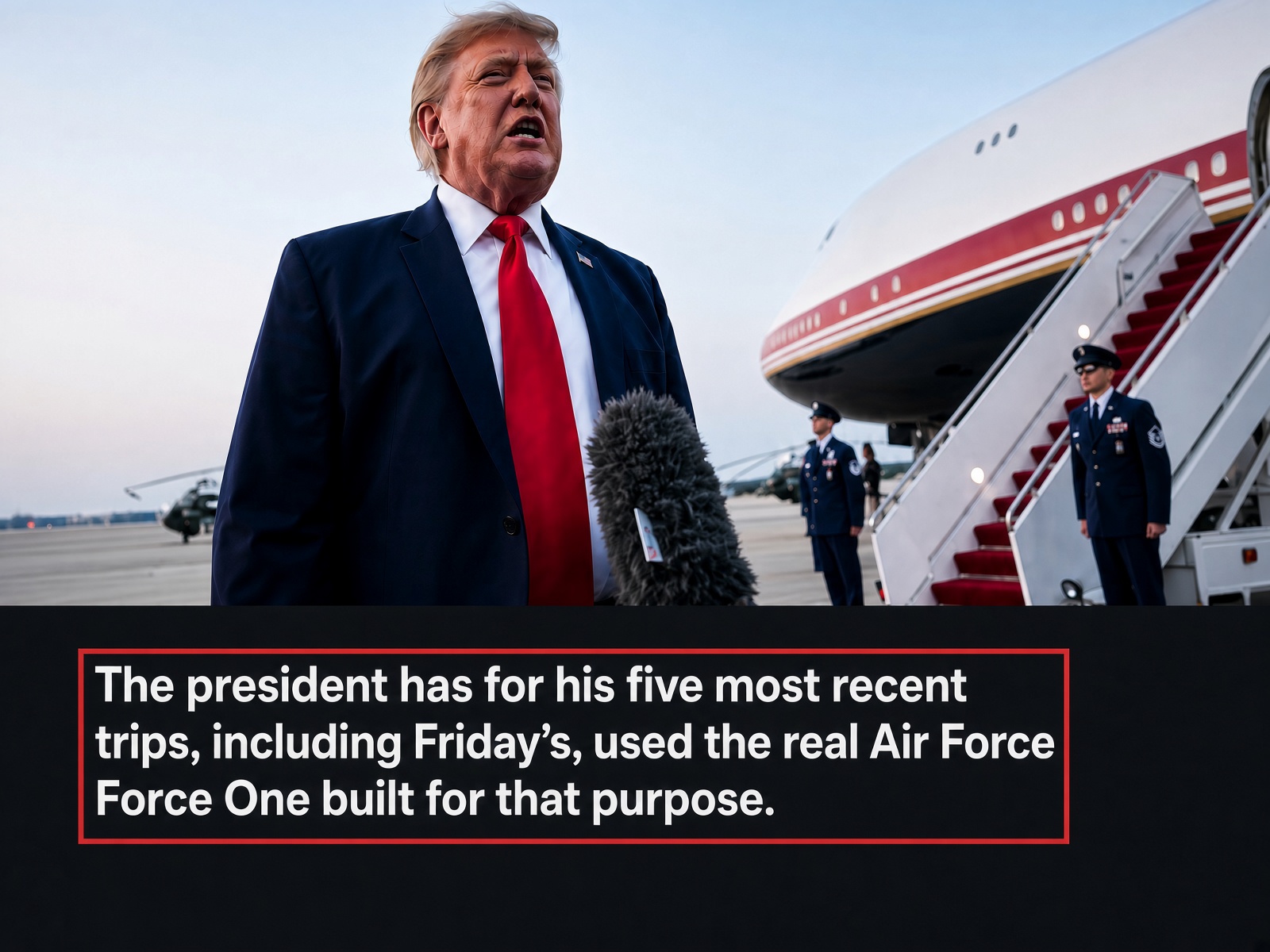
White House Offers No Explanation as President Returns to Primary Air Force One
President Trump has flown aboard the primary Air Force One aircraft for each of his five most recent trips, including a flight on Friday, according to travel records — a departure from an earlier stretch in which the president had been using a different government plane. The White House has not offered any public explanation for the change.
The shift has drawn attention because the administration similarly provided no official rationale when the president began bypassing the main presidential jet in the first place. The two VC-25A aircraft — modified Boeing 747s operated by the Air Force out of Joint Base Andrews in Maryland — are the planes most Americans associate with the term Air Force One, a designation that technically applies to any Air Force aircraft carrying the president.
During the period when Trump was not using the primary jet, observers and reporters noted the departure from standard practice but received no comment from the White House or Air Force on the reasons. Possibilities that aviation and security analysts often cite in such situations include scheduled maintenance, mechanical work, or logistical considerations tied to specific destinations. None of those explanations has been confirmed in this case.
The return to the main aircraft has now extended across five consecutive trips, suggesting whatever prompted the earlier switch has been resolved — though the administration has not confirmed even that much. White House press officials have not addressed questions about the travel arrangements.
Presidential travel is funded by taxpayers and is subject to a degree of public accountability, making the type of aircraft used a matter of more than symbolic interest. The operational costs associated with flying the large VC-25A differ from those of smaller government jets, and the logistics of each trip — including the size of the traveling press pool and the support aircraft that accompany the president — can vary accordingly.
The question of the primary fleet’s condition carries additional context given the long-running effort to replace the aging VC-25As. Boeing holds a contract to deliver two new presidential aircraft, a program that has encountered repeated delays and significant cost increases since it was announced. The current jets have been in service for decades, and questions about their maintenance schedules have periodically surfaced in aviation and defense reporting.
For now, the White House has given no indication it intends to address the matter, leaving the reasons for both the earlier switch and the recent return to the primary aircraft unconfirmed.