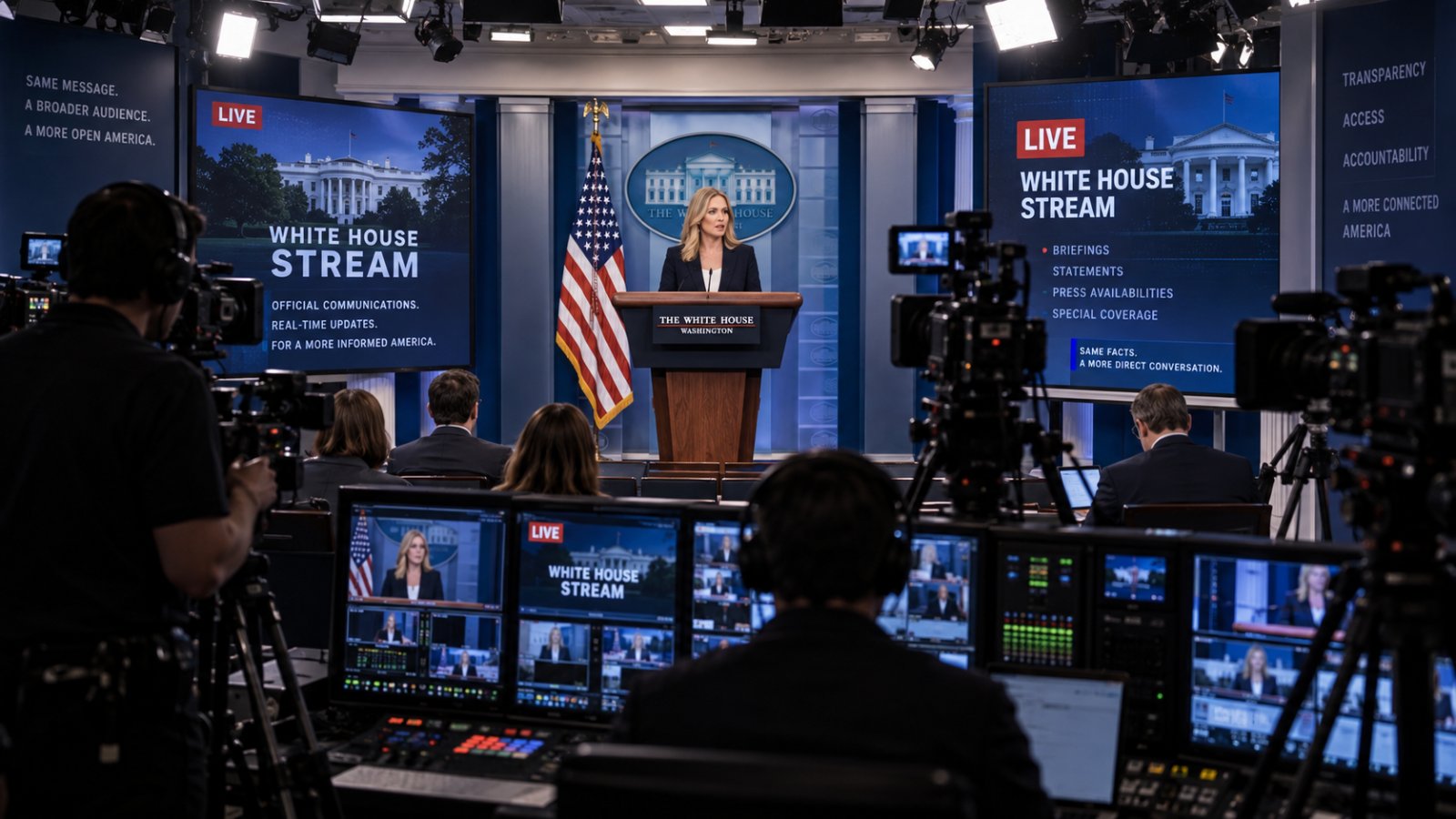
The White House has launched a new streaming service designed to operate around the clock, broadcasting official administration communications, press briefings, and other daily activities. The initiative emerged after several major television networks withdrew from the long-standing press pool arrangement that has historically coordinated media access to the president and White House events.
The press pool system has functioned for decades as a mechanism to balance broad media coverage with practical constraints on physical access. Networks rotate representatives who gather footage and information shared across outlets, creating a system that both protects security operations and ensures diverse reporting on presidential activities. The departure of major broadcasters from this arrangement marks a notable departure from established protocol.
According to the administration, the new platform will provide continuous, unfiltered access to official activities and communications. Officials have characterized the move as an effort to bring citizens closer to decision-making processes and reduce reliance on editorial filtering by traditional media organizations.
The shift reflects broader tensions between the White House and mainstream broadcast news in recent years. Disputes over coverage decisions, editorial independence, and access protocols have created friction, with the administration contending that traditional outlets do not fairly represent official positions and priorities.
Media observers have raised questions about the implications of bypassing traditional press oversight. The press pool system, despite its limitations, has served as a mechanism for independent journalists to ask questions, observe events, and verify information in real time. Direct broadcasting of official content without press scrutiny removes an intermediary step designed to ensure accuracy and accountability.
The streaming service’s structure and content offerings remain under development. Details about technical access, what types of activities will be covered, and how the administration will staff and manage continuous production have not been fully outlined.
The decision sits within a broader landscape of political communication strategies, as various administrations have sought to establish direct channels to the public through social media, podcasts, and proprietary platforms. This represents an escalation of that trend, moving from supplementary channels to a primary distribution mechanism for official information.