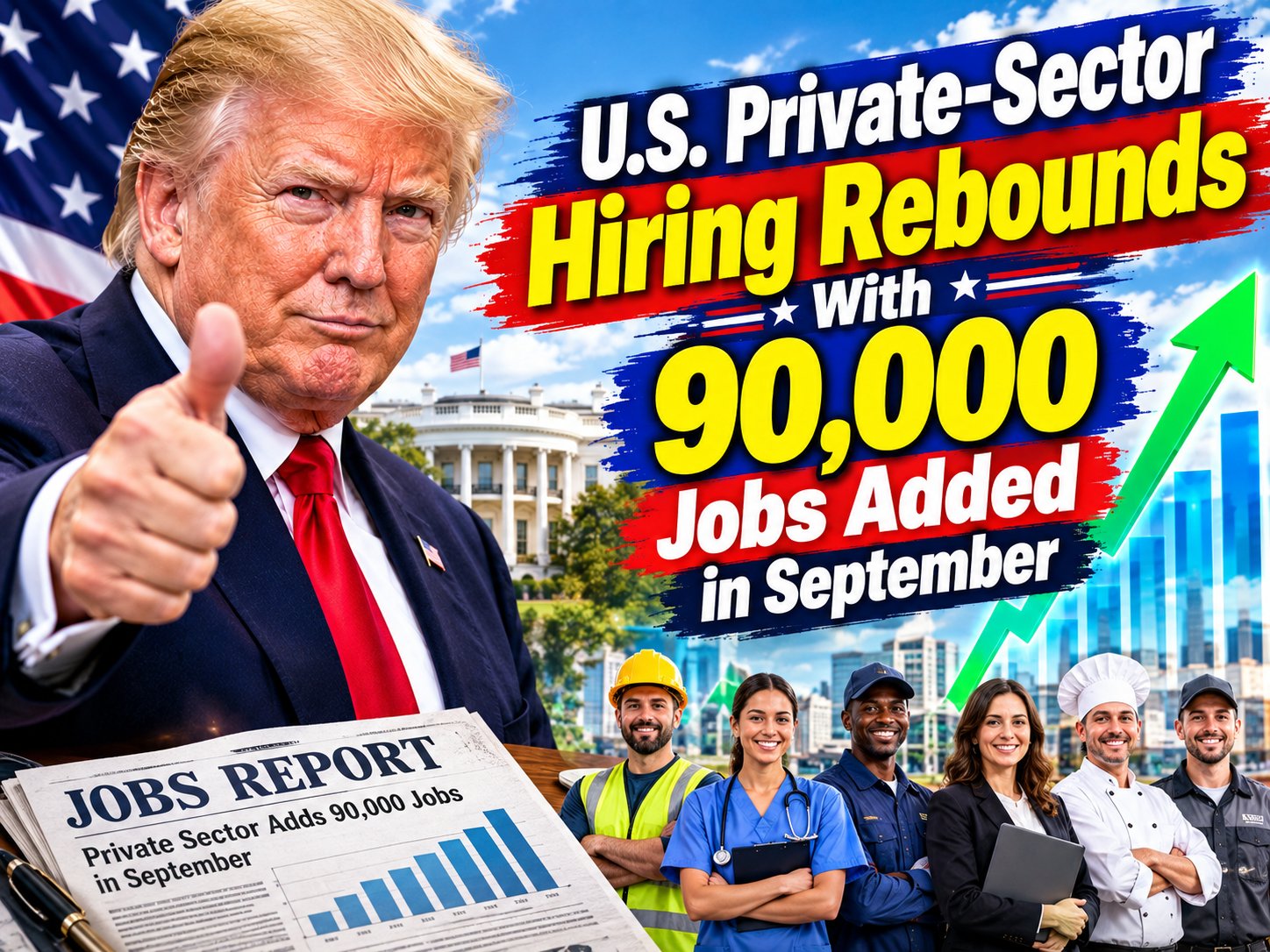
U.S. Private-Sector Hiring Rebounds With 90,000 Jobs Added in September
U.S. private-sector employers added 90,000 jobs in September, according to new employment data, offering a measure of relief after a stretch of subdued hiring that had raised concerns about the durability of the economic expansion. While the figure falls short of the monthly averages recorded during the post-pandemic hiring surge, analysts described it as a meaningful uptick that suggests businesses are still willing to bring on workers despite a challenging borrowing environment.
The September gain followed a period in which high interest rates, tighter credit conditions, and cautious consumer sentiment had prompted many employers to slow expansion plans. The rebound, though modest in historical terms, points to underlying demand for labor in key corners of the economy, particularly in service-oriented industries that have proven more insulated from the effects of elevated borrowing costs.
Healthcare, hospitality, and professional services were among the sectors that continued to drive job creation, reflecting persistent consumer demand for services even as spending on goods has moderated. Rate-sensitive sectors such as construction and manufacturing have faced more headwinds, and the September data broadly reflected that divergence.
The report arrives at a moment of heightened scrutiny of the U.S. labor market. Federal Reserve officials have signaled that the strength or weakness of employment conditions will be a central factor in determining whether additional adjustments to interest rates are warranted. A rebound in private payrolls could temper expectations among investors who had anticipated a faster easing of monetary policy, as it suggests the labor market has not cooled to the degree that might compel more aggressive rate cuts.
Economists cautioned against reading too much into a single month’s data. September figures can be influenced by seasonal factors, weather disruptions, and changes in how businesses respond to survey-based reporting. The broader trend over recent quarters has shown a gradual deceleration in job creation, and most analysts expect that dynamic to persist as the lagged effects of past rate increases continue to work through the economy.
For workers and households, a stabilizing job market heading into the final quarter of the year carries practical significance. Sustained employment supports consumer spending, which remains the primary engine of U.S. economic growth. With the holiday retail season approaching, businesses and policymakers alike will be watching subsequent monthly reports for confirmation that September’s rebound represents a durable trend rather than a brief reprieve.
The government’s broader monthly employment report, which includes public-sector jobs and additional survey data, is expected to provide a fuller picture of labor market conditions in the coming days.