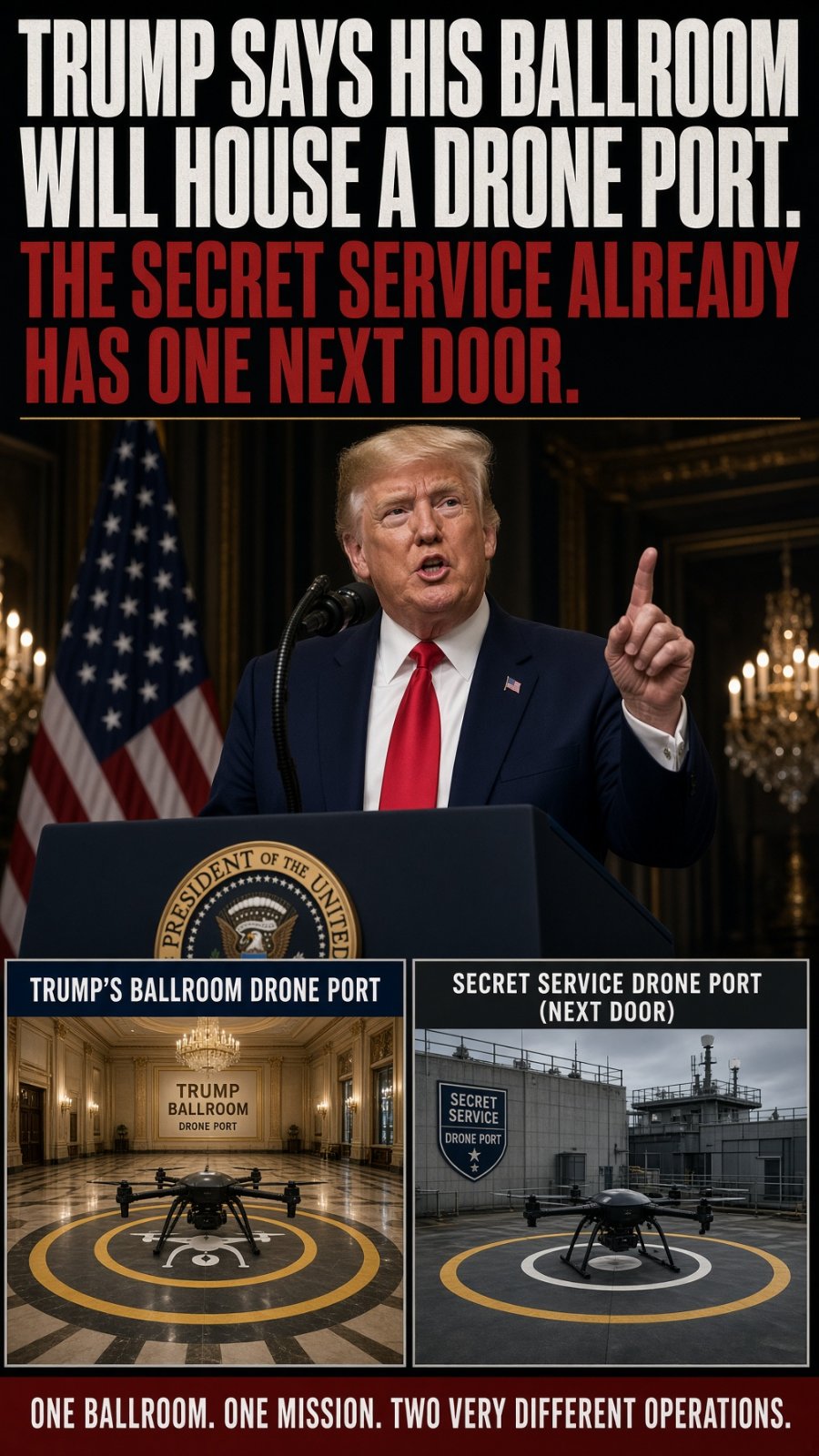
Donald Trump recently announced plans to develop a drone port at one of his commercial properties, describing it as a facility to support emerging aerial vehicle operations. The announcement comes as reports indicate that the U.S. Secret Service already operates a drone facility on property directly adjacent to the planned Trump development.
The proximity of the two proposed operations has raised questions about coordination and awareness between the two entities. It remains unclear whether Trump’s team consulted with federal authorities before publicly announcing the drone port plan, or whether the Secret Service was notified in advance of the project.
Drone port facilities are part of a broader expansion of infrastructure designed to support unmanned aerial systems, including delivery operations and other commercial uses. As drone technology becomes more prevalent in both government and private sectors, the need for designated operational spaces has grown. However, the regulatory framework governing such facilities, particularly when multiple operators exist in the same area, remains complex.
The Federal Aviation Administration oversees airspace usage and drone operations, establishing rules for commercial and federal use. Managing two drone operations in adjacent locations would require careful coordination to prevent airspace conflicts and ensure safety protocols are observed. The specific capabilities and purposes of each facility—whether the Secret Service operation and the proposed Trump port would conduct different types of missions or operate in the same airspace—could affect the feasibility of both operations.
Trump’s business portfolio has increasingly included technology-focused ventures and real estate developments that incorporate emerging infrastructure. The drone port announcement reflects both his interest in positioning his properties at the forefront of modern logistics and the broader commercial momentum behind drone technology.
It remains to be seen whether the Trump organization and the Secret Service will formalize a coordination arrangement or whether the drone port project will be modified in light of the existing nearby operation. The incident underscores the evolving nature of unmanned aerial technology and the need for clear communication between private developers and federal agencies as communities prepare for expanded drone operations.
