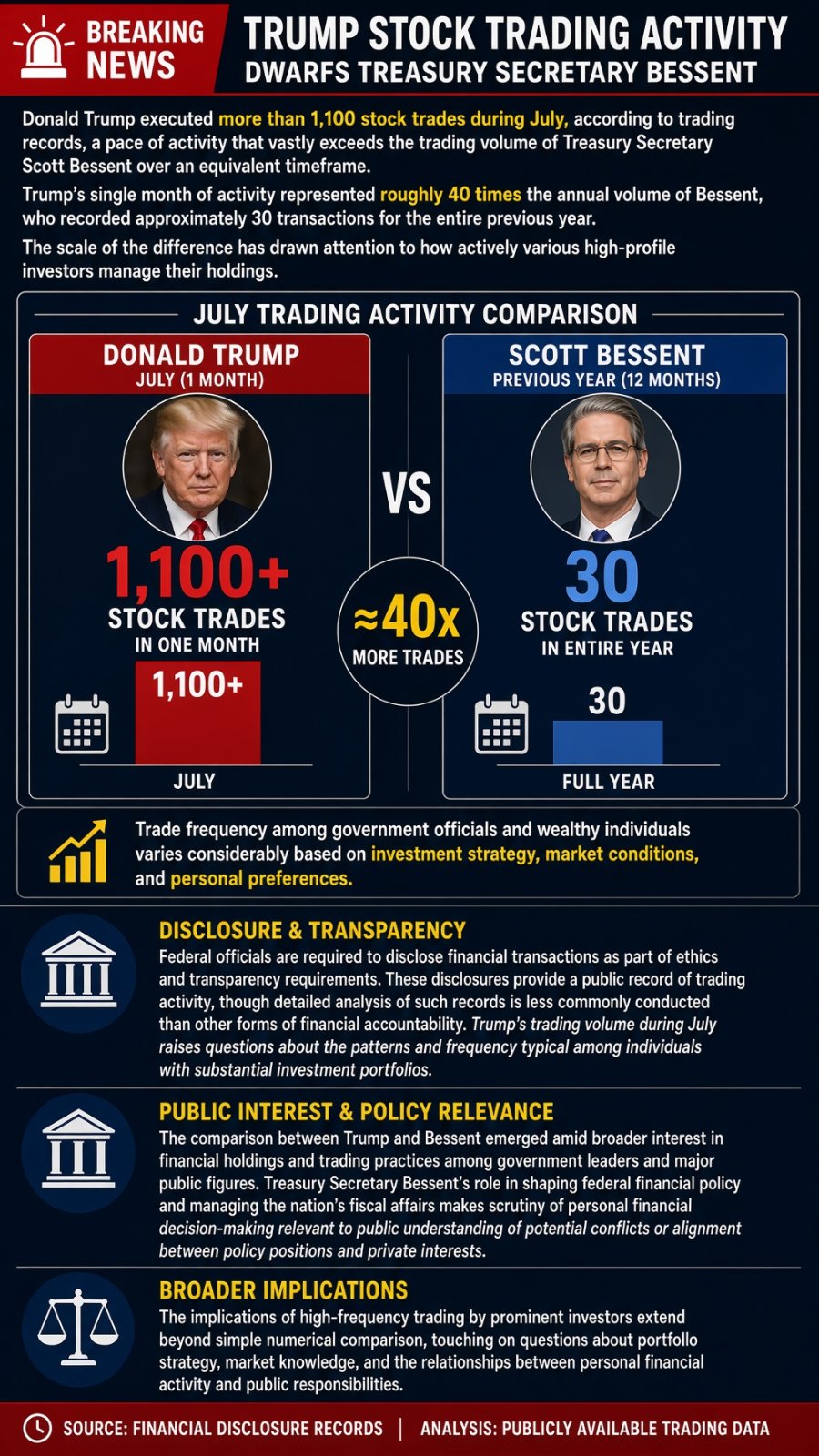
Donald Trump executed more than 1,100 stock trades during July, according to trading records, a pace of activity that vastly exceeds the trading volume of Treasury Secretary Scott Bessent over an equivalent timeframe.
The comparison underscores differing approaches to personal portfolio management among prominent political figures. Bessent’s trading activity for the entire previous year totaled approximately 30 transactions, meaning Trump’s single month of activity represented roughly 40 times the annual volume. The scale of the difference has drawn attention to how actively various high-profile investors manage their holdings.
Trade frequency among government officials and wealthy individuals varies considerably based on investment strategy, market conditions, and personal preferences. Some investors pursue active trading strategies involving frequent adjustments to portfolio composition, while others adopt longer-term holding approaches with minimal turnover. The reasons behind differing activity levels can reflect everything from confidence in specific holdings to responses to market movements or changes in personal financial circumstances.
Federal officials are required to disclose financial transactions as part of ethics and transparency requirements. These disclosures provide a public record of trading activity, though detailed analysis of such records is less commonly conducted than other forms of financial accountability. Trump’s trading volume during July raises questions about the patterns and frequency typical among individuals with substantial investment portfolios.
The comparison between Trump and Bessent emerged amid broader interest in financial holdings and trading practices among government leaders and major public figures. Treasury Secretary Bessent’s role in shaping federal financial policy and managing the nation’s fiscal affairs makes scrutiny of personal financial decision-making relevant to public understanding of potential conflicts or alignment between policy positions and private interests.
The implications of high-frequency trading by prominent investors extend beyond simple numerical comparison, touching on questions about portfolio strategy, market knowledge, and the relationships between personal financial activity and public responsibilities.