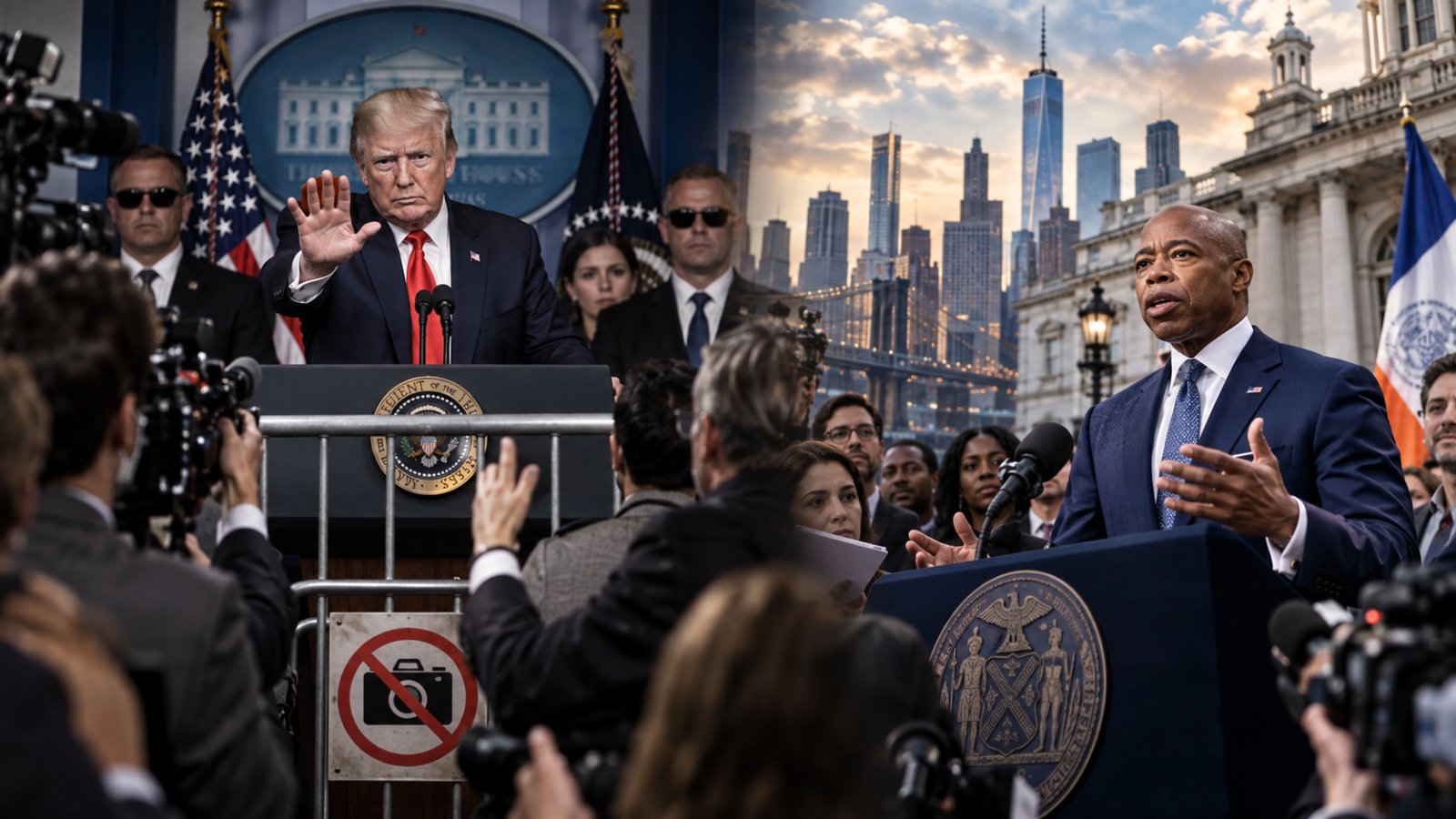
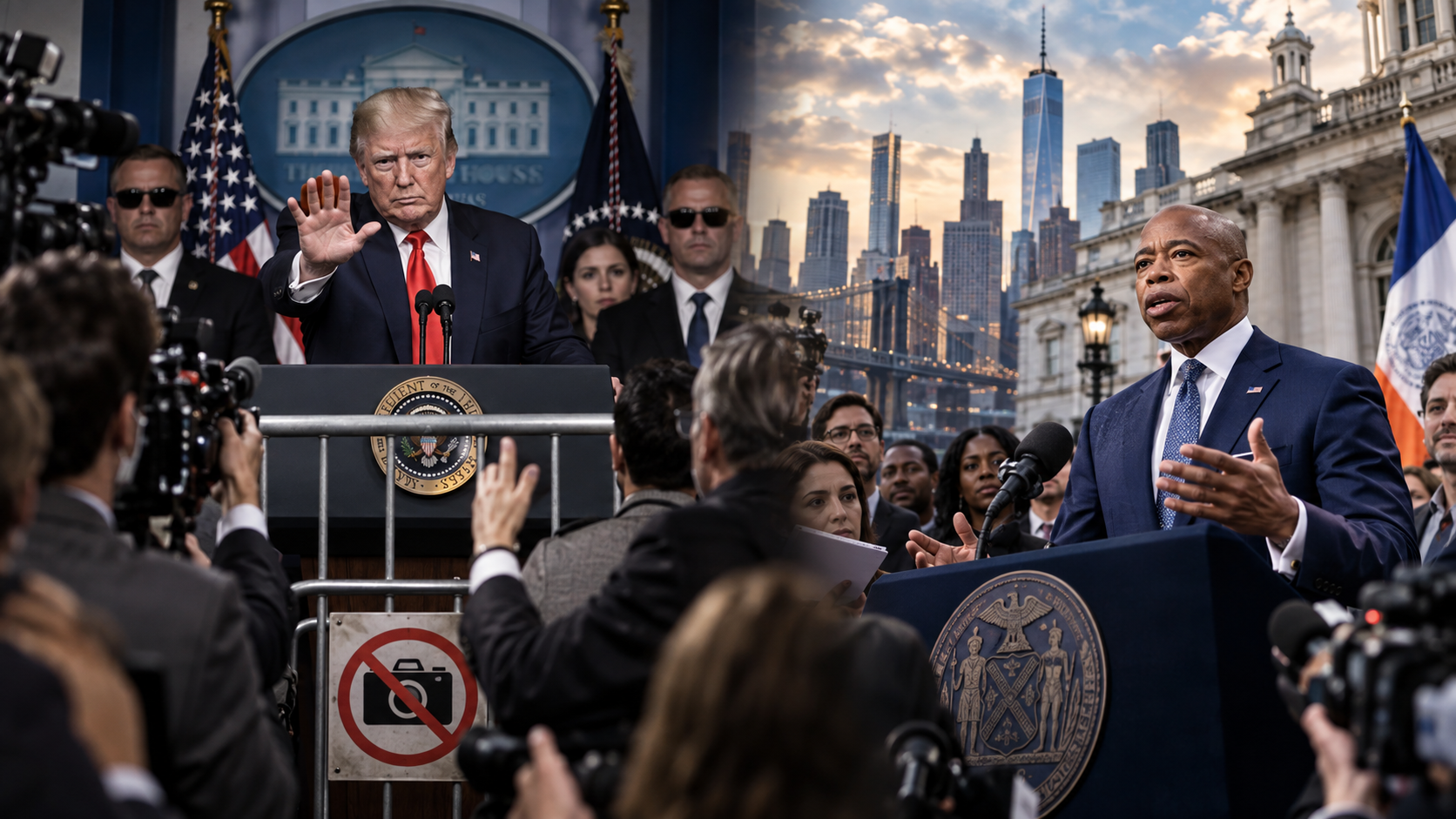
The Trump administration has moved to restrict media access at the White House, setting off a confrontation over press freedom and executive authority. The restrictions have drawn swift criticism from news organizations and, notably, from New York City’s mayor, who has publicly advocated for full press access to White House operations.
While specific details of the access limitations remain contested, the dispute touches on fundamental questions about the relationship between government and the press. News organizations argue that unrestricted access to White House proceedings and personnel is vital for informing the public about executive actions and decision-making. Administration officials have offered their own rationale for the changes, though the precise justifications cited have varied.
The involvement of the NYC mayor adds a notable dimension to what might otherwise remain an internal Washington dispute. Municipal leaders rarely weigh in on federal press policies, suggesting either heightened concern about the precedent being set or a calculation that the issue resonates with constituents. The mayor’s public backing of press freedom reflects broader anxiety among media advocates that tightened access could limit journalistic scrutiny.
White House media policies have shifted across administrations, reflecting different philosophies about government transparency and presidential communication. Some past administrations have expanded access, while others have imposed restrictions during periods of particular tension with the press corps. The current dispute will likely influence how reporters cover the administration and may set a tone for ongoing negotiations over credential issuance, briefing room arrangements, and off-the-record access.
The confrontation occurs against a backdrop of broader national debates about media credibility, the role of journalism in democratic oversight, and the executive’s prerogatives in managing its own communications. Both supporters of the restrictions and those opposing them will point to their respective concerns about bias, security, and the public interest as the dispute continues.
