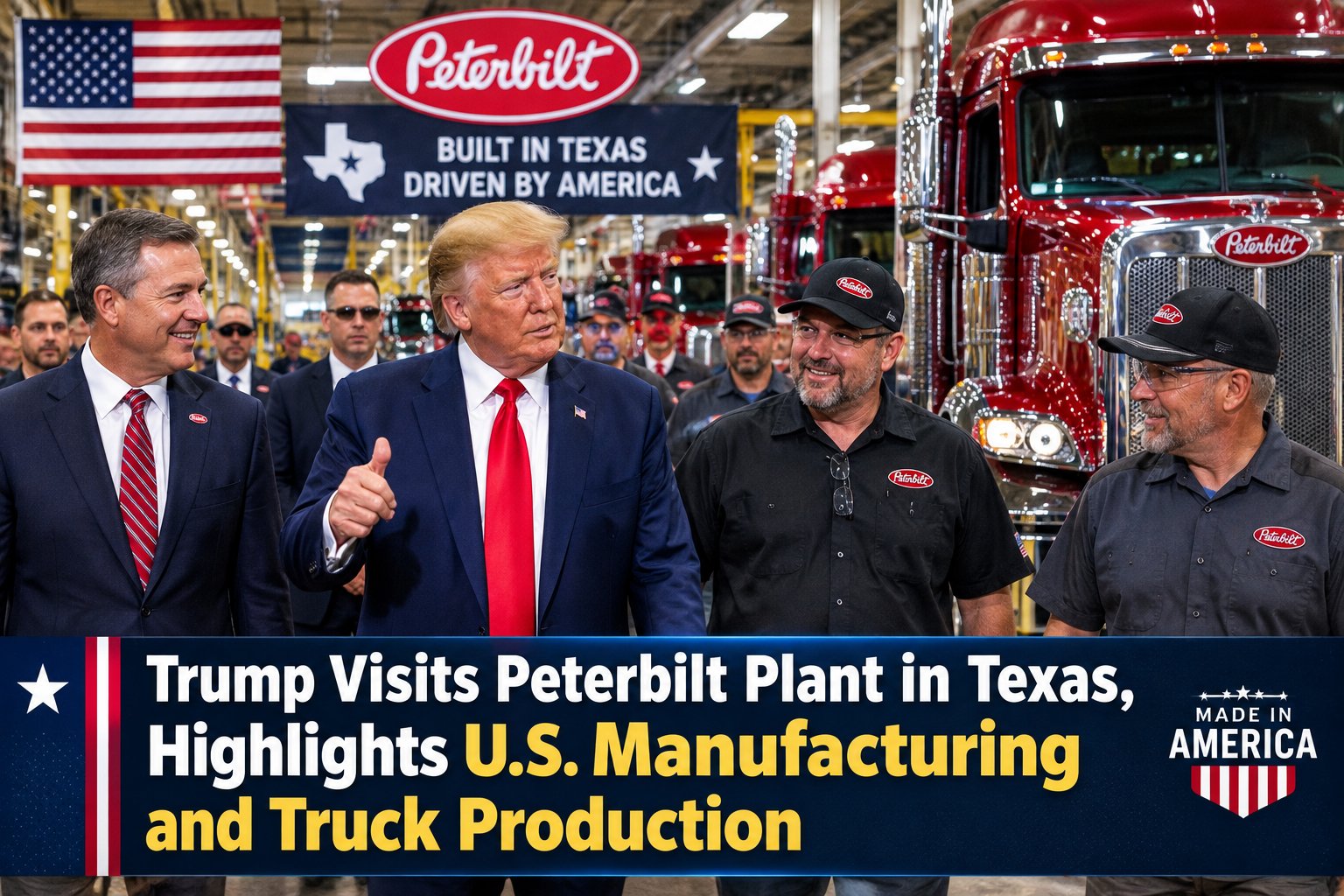
President Donald Trump visited the Peterbilt Motors manufacturing facility in Denton, Texas, on October 1, 2026, meeting with employees and company leaders while highlighting domestic truck manufacturing and his administration’s trade policies.
The visit focused heavily on American manufacturing, tariffs, production growth, and the role of the trucking industry in the U.S. economy.
Trump Praises Peterbilt Workers
Speaking to employees at the Denton facility, Trump described Peterbilt workers as “proud, hardworking patriots” and praised the company for its long history of manufacturing trucks in the United States.
Trump said the facility produces approximately 200 trucks per day and noted that Peterbilt is expanding its operations.
Peterbilt has manufactured trucks for more than 85 years and sells its products in markets around the world.
Focus on American Manufacturing
A major theme of Trump’s remarks was the future of U.S. manufacturing.
Trump argued that previous trade policies allowed foreign products to compete with American-made goods and said his administration is seeking to change that approach through tariffs and other policies.
“For decades, every other President let other nations flood our markets with shoddy and substandard foreign goods,” Trump said during the event.
He continued by arguing that those policies had damaged American manufacturing and workers.
These statements represent Trump’s assessment of previous trade policies and their effects.
Peterbilt Reports 1,000 New Employees
During the event, Peterbilt events manager Sarah Renshaw told Trump that the company had increased production and hired approximately 1,000 additional employees.
She said the new hires included her son, making her family a third-generation Peterbilt family.
The company has said the Denton operation is experiencing increased demand and is expanding its workforce and production capacity.
Tariffs and Truck Manufacturing
Trump also used the Peterbilt visit to defend his administration’s tariffs.
The president argued that tariffs can encourage production in the United States by making imported products more expensive relative to domestic manufacturing.
Peterbilt representatives have credited the company’s recent expansion and hiring with increased production, while the broader economic effects of tariffs remain a subject of debate among economists and businesses.
Changes to Truck Regulations
Trump also discussed changes to nitrogen-oxide regulations affecting heavy-duty trucks.
He said the regulatory changes could reduce manufacturing costs by approximately $6,000 per truck.
The administration has argued that reducing certain regulatory requirements will lower costs for manufacturers and consumers.
“Made in the USA”
Throughout the event, Trump emphasized the importance of American-made products.
Peterbilt’s Denton facility is part of the company’s long-standing U.S. manufacturing operations, and the president pointed to the company’s “Made in the USA” identity as an example of domestic industrial production.
The event also highlighted the skilled workers involved in building heavy-duty trucks, including employees working in manufacturing, engineering, assembly, and management.
Why the Visit Matters
The Peterbilt appearance comes as the Trump administration continues to emphasize domestic manufacturing and trade policy.
The heavy-truck industry is closely connected to construction, freight transportation, logistics, agriculture, and other parts of the U.S. economy.
Peterbilt’s reported expansion and hiring provide a local example of the broader debate over how tariffs, regulations, demand, and investment affect American manufacturing.
Looking Ahead
Peterbilt’s expansion will depend on continued demand for heavy-duty trucks and the company’s future investment decisions.
The Trump administration, meanwhile, continues to promote tariffs and regulatory changes as tools for increasing domestic manufacturing.
The Denton event brought those policies directly into an American factory, where workers and company officials discussed production growth, employment, and the future of truck manufacturing.
Conclusion
President Trump’s visit to Peterbilt’s Denton facility placed American truck manufacturing at the center of his message about trade and industrial policy.
The company says production has increased and approximately 1,000 employees have been added, while Trump used the event to promote his administration’s approach to tariffs and manufacturing regulations.
The longer-term effects of these policies on truck prices, employment, production, and the broader manufacturing sector will depend on market conditions and how the policies develop.