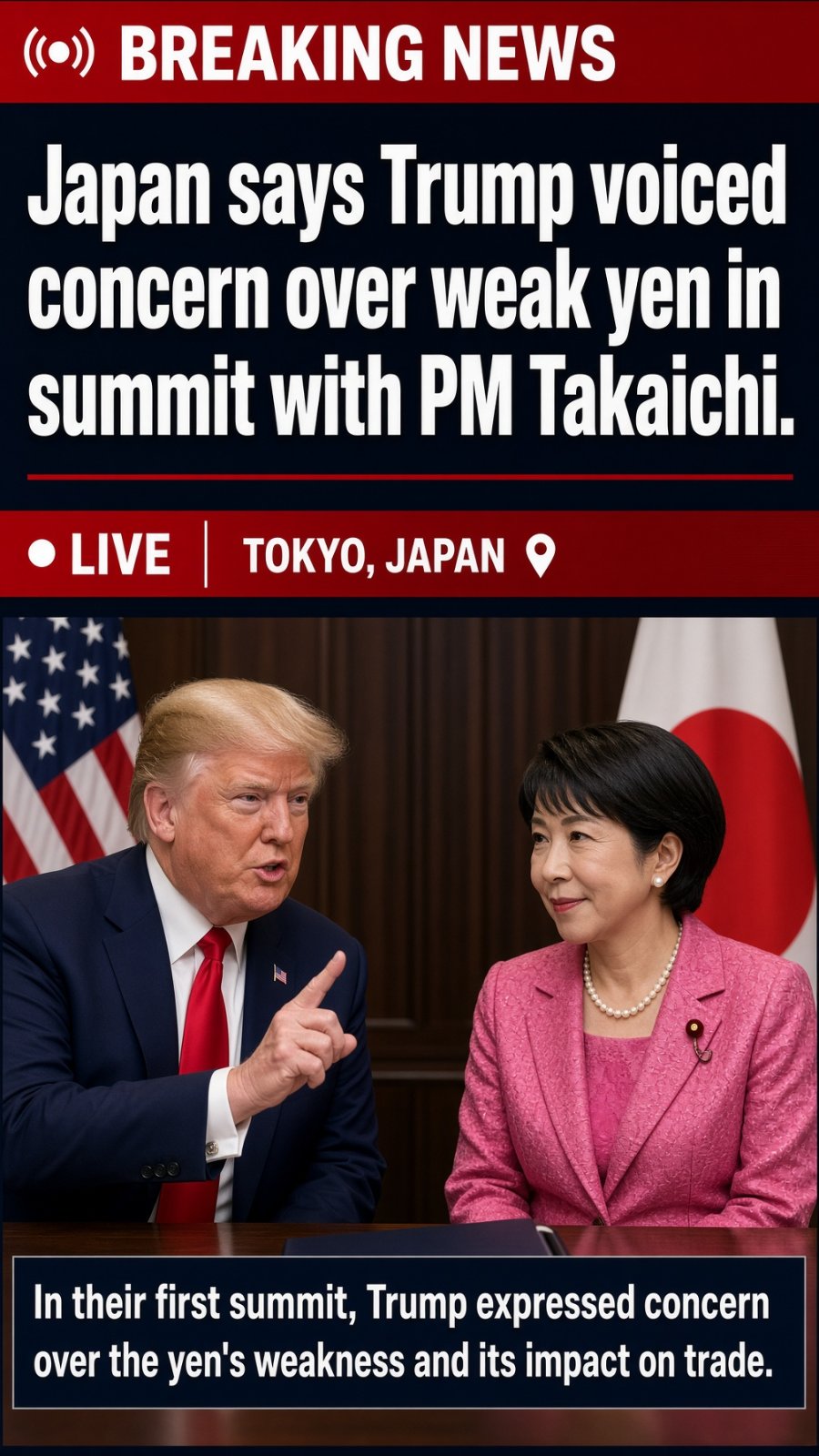
President Trump raised concerns about the weakness of the Japanese yen during a recent summit with Japanese Prime Minister Shigeru Takaichi, according to statements from Tokyo. The discussion touched on currency dynamics between the two nations, a longstanding economic issue that affects trade relations and competitiveness in global markets.
The meeting underscored the tension that can exist between security allies over economic policy. While Japan and the United States maintain a strong strategic partnership, their approaches to currency management and trade have periodically created friction. Currency strength plays a significant role in determining export competitiveness, and a weaker yen can make Japanese goods cheaper for foreign buyers while making imports more expensive for Japanese consumers.
Trump’s focus on the yen reflects a broader pattern of his administration scrutinizing what it views as unfavorable currency practices. Weakness in a nation’s currency can provide competitive advantages in international markets, a dynamic that has drawn scrutiny from trading partners who argue it amounts to an indirect subsidy on exports.
For Japan, the conversation comes at a time when economic conditions remain complex. Monetary policy decisions made in Tokyo ripple through global markets and affect major Japanese exporters in sectors ranging from automobiles to electronics and semiconductors. The U.S. remains Japan’s largest security ally and a crucial economic partner, making these bilateral discussions a regular feature of high-level diplomacy.
The nature of Trump’s specific concerns and any agreements reached during the summit were not immediately detailed in full. The exchange nevertheless demonstrated that currency issues remain a topic of active discussion between Washington and Tokyo, even as both nations navigate broader economic and geopolitical priorities in the region.