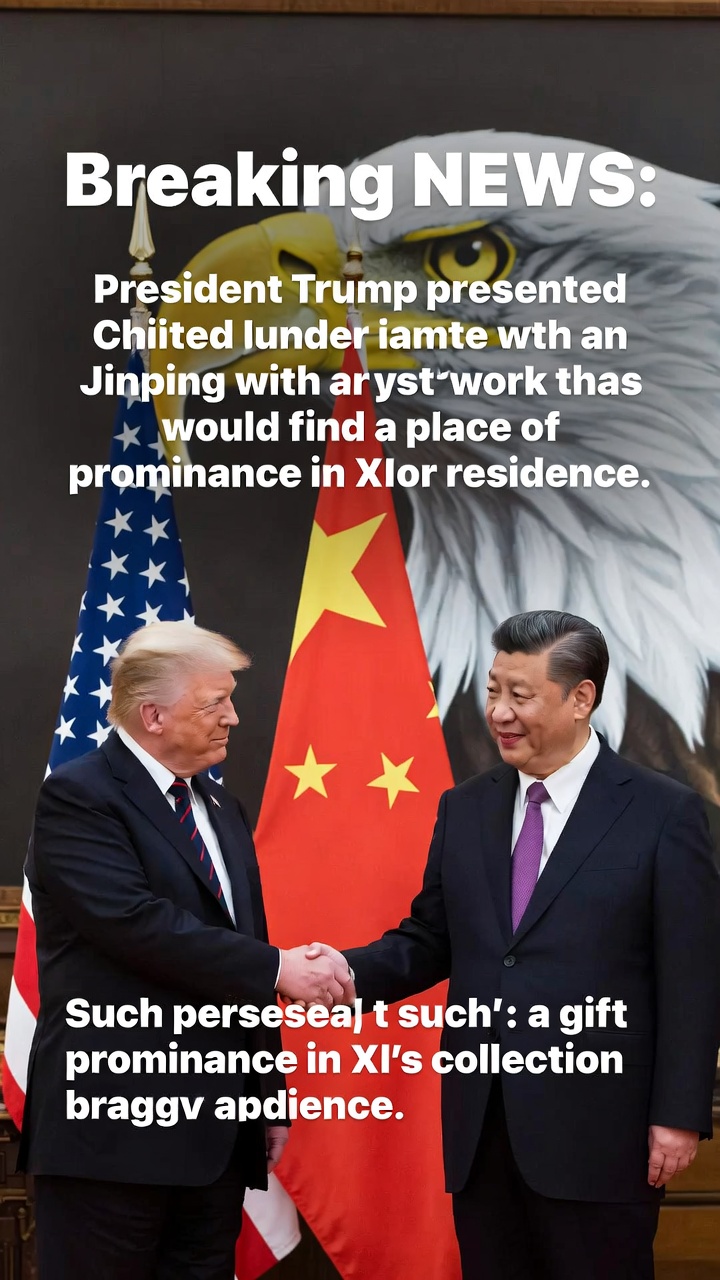
President Trump recently presented Chinese leader Xi Jinping with an artwork featuring a bald eagle, the national symbol of the United States. The gift, described as striking, was offered during a diplomatic exchange between the two leaders.
In commenting on the artwork, Trump expressed hope that it would find a place of prominence in Xi’s collection or residence, signaling the personal nature of the gesture. The choice of subject matter—the bald eagle—carries particular resonance, as the bird has served as America’s national symbol since the late 18th century and represents core aspects of American identity and heritage.
Artwork and cultural items have long played a role in high-level diplomacy, often selected for their symbolic weight and their ability to communicate respect or shared appreciation between world leaders. The presentation of such a gift typically reflects the current state of bilateral relations and can serve as a diplomatic signal to broader audiences.
The exchange between Trump and Xi occurs within the broader context of U.S.-China relations, which have experienced periods of significant tension alongside ongoing diplomatic engagement. Both nations maintain channels of communication at senior levels, and gestures such as gift-giving can be interpreted as efforts to maintain dialogue despite other areas of disagreement.
The artwork itself, created in a striking style, became a point of note in their interaction, with Trump’s remarks suggesting an optimistic view of how the piece would be received and displayed. Such personal touches in diplomacy often carry meaning beyond their surface appearance, with careful attention typically paid to what is offered and how it is presented.
The gift adds to the record of exchanges between the two leaders and may be examined by analysts of U.S.-China relations as part of the broader pattern of their diplomatic engagement.