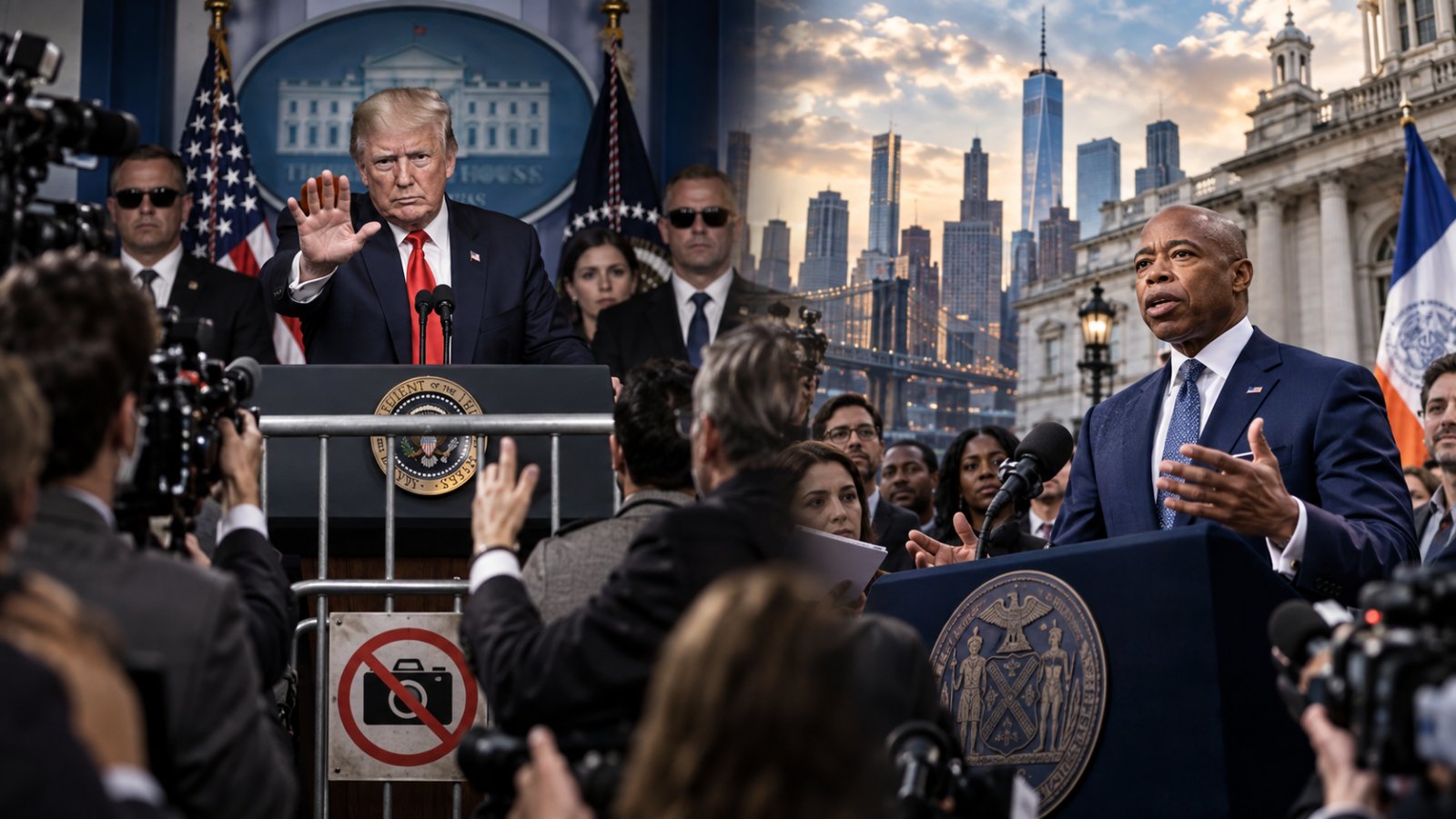
Former President Donald Trump has announced plans to establish a television network, citing frustrations with coverage from mainstream media organizations. The proposal follows a series of confrontations between Trump and major news outlets regarding access and editorial decisions.
The venture would operate as a broadcast or cable network controlled by Trump or his affiliated entities, according to statements made during the announcement. The network would ostensibly provide news and programming aligned with Trump’s political perspective and priorities. Details regarding funding, launch timeline, and specific programming remain limited.
Commentators have drawn comparisons between the proposal and state-controlled media models in other countries, pointing to the unusual nature of a major U.S. political figure establishing a dedicated broadcast network. Critics argue that such an arrangement blurs the line between political organization and journalistic institution, while supporters contend that it represents a legitimate response to perceived bias in existing media.
The announcement occurs amid a broader fragmentation of the American media landscape. Cable news viewership has declined in recent years, while digital platforms have become primary sources of political information for many voters. Several political figures and movements have previously launched their own media platforms or networks to reach supporters and control their messaging.
Media scholars have noted that the concept of state-run television carries different implications in democratic versus authoritarian contexts. In the United States, broadcast licenses are regulated by the Federal Communications Commission, and any network would operate under existing regulatory frameworks governing ownership and content.
The viability of such a venture remains uncertain. Commercial television networks depend on advertising revenue and audience size to sustain operations. Questions persist about whether a network built around a single political figure could attract sufficient viewership and advertiser support to operate profitably.
The proposal reflects ongoing tensions between political leaders and institutional media over questions of fairness, access, and the role of journalism in democratic discourse. Whether the network proceeds to launch and what form it ultimately takes remain to be determined.
