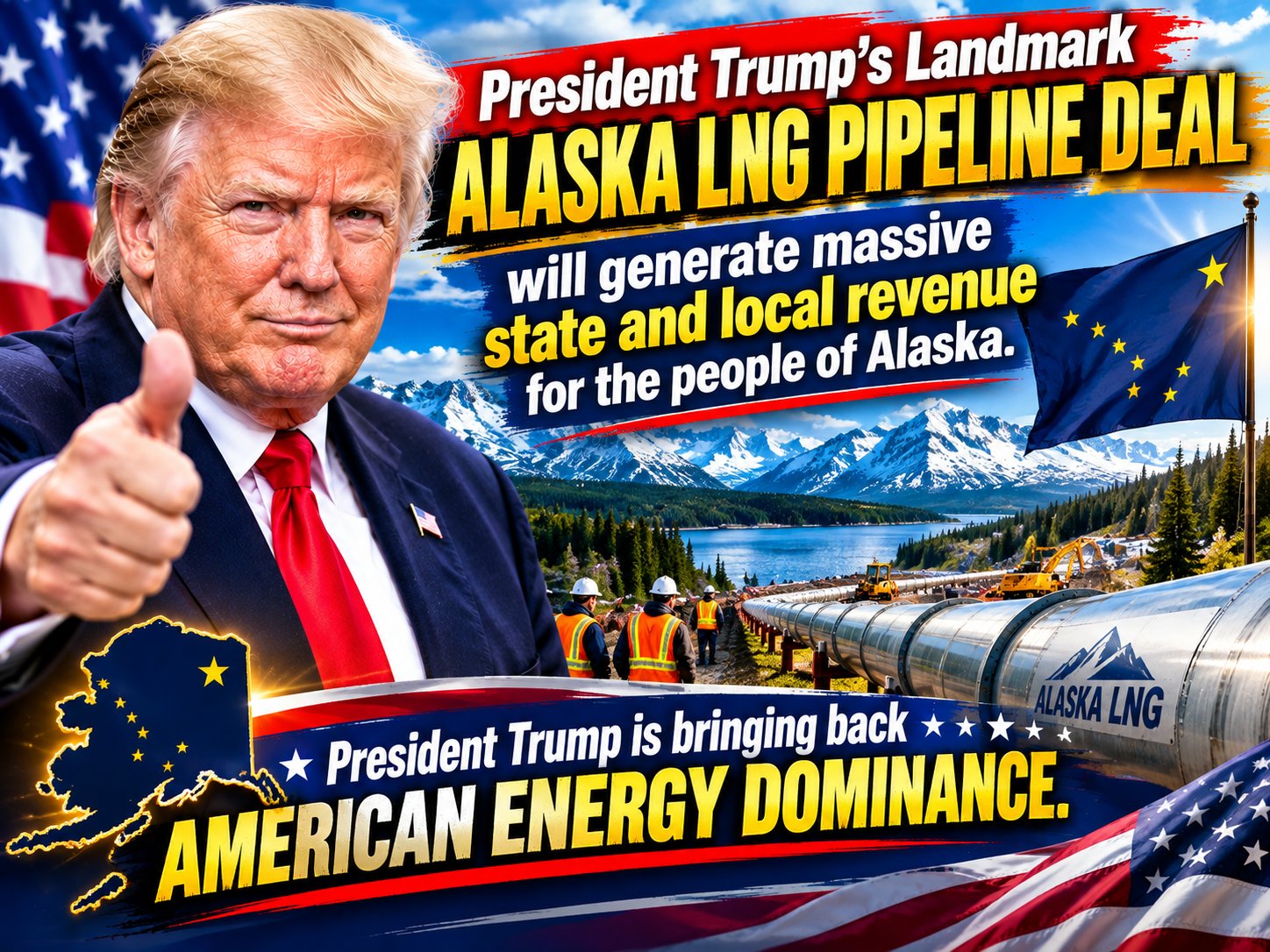
Trump Administration Advances Alaska LNG Pipeline Deal, Promising Major Revenue for the State
The Trump administration has moved to push forward a landmark agreement tied to the long-discussed Alaska liquefied natural gas pipeline project, a sprawling infrastructure initiative that backers say could deliver substantial revenue to state and local governments while reshaping America’s role in global energy markets.
The project, in various forms a fixture of Alaska energy policy discussions for decades, would construct a large-diameter natural gas pipeline running from the prolific North Slope oil and gas fields to a liquefaction facility on Alaska’s southern coast. There, natural gas would be chilled into liquid form and loaded onto tankers for export, with Asian markets widely seen as the primary destination.
Proponents argue the project could generate significant royalty payments, taxes, and related revenues for Alaska, a state that funds much of its government through energy extraction income and currently lacks a state income or sales tax. North Slope oil production has declined considerably from its historic highs, and state officials have long viewed a gas monetization project as a potential pillar of future fiscal stability.
President Trump framed the development as part of a broader push toward what his administration calls American energy dominance — a policy agenda centered on expanding domestic production of oil, natural gas, and coal, as well as growing the United States’ capacity to export LNG to allies and other international partners.
The Alaska LNG concept has attracted renewed interest in recent years as global demand for liquefied natural gas has grown, particularly in Japan, South Korea, and other Asian economies seeking to diversify their energy supplies. Securing firm purchase commitments from international buyers has historically been one of the central challenges facing the project, alongside the immense costs associated with building infrastructure across one of North America’s most remote and environmentally sensitive landscapes.
Alaska state officials have generally supported the project across party lines, viewing it as a potential economic catalyst for a state that has grappled with budget shortfalls tied to fluctuating oil prices. Any significant revenue flowing to the state could affect everything from public services to the annual Permanent Fund dividend paid to Alaska residents.
Environmental groups and some Indigenous communities have raised concerns about the pipeline’s potential impact on sensitive terrain, wildlife habitats, and waterways along its proposed route. Those objections are expected to be a factor as the project moves through regulatory and legal processes.
The full scope of the agreement, including financing arrangements, construction timelines, and the identities of international partners, is expected to receive close scrutiny from energy analysts and policymakers in the coming weeks as further details emerge.