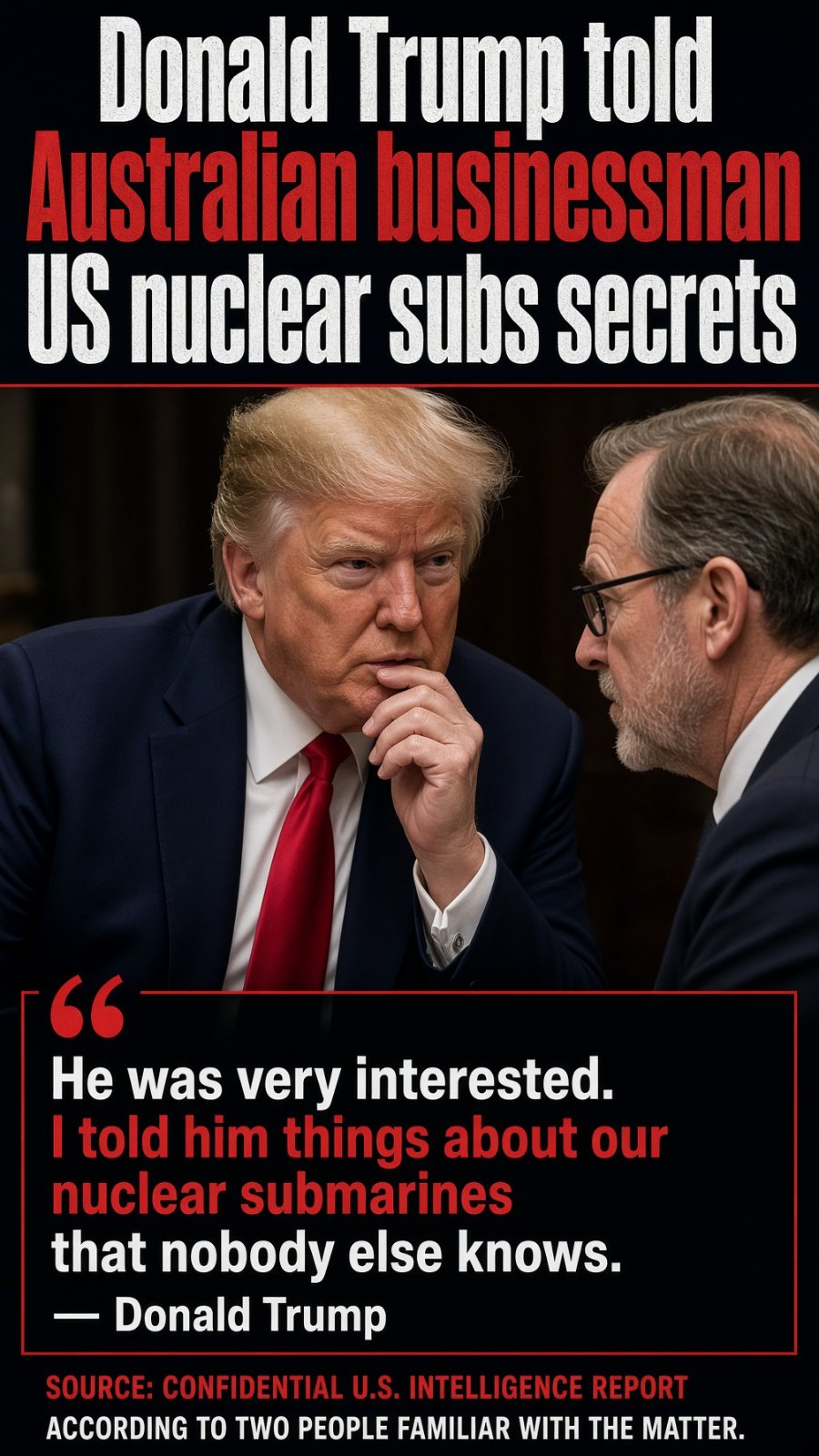
A report has emerged alleging that Donald Trump disclosed classified information about U.S. nuclear submarine capabilities during a conversation with an Australian businessman. The claim centers on Trump’s handling of sensitive defense technology details in what was described as a private setting.
The allegation raises significant questions about the protection of classified national security information. Details concerning submarine capabilities are typically restricted to government personnel with appropriate security clearances and shared with foreign governments only through formal channels and bilateral defense agreements.
The United States and Australia maintain a longstanding defense partnership that includes cooperation on military technology and intelligence matters. Such arrangements are conducted through official government-to-government channels with established protocols for safeguarding sensitive information.
The incident comes amid ongoing public scrutiny regarding how Trump has handled classified materials in the past. Previous investigations examined the handling of government documents, and this new allegation adds to broader questions about adherence to classification standards.
The identity of the Australian businessman and the specific circumstances of the conversation remain unclear. It is also uncertain whether any formal review or investigation has been initiated in response to the allegation. The U.S. government has not yet issued a public statement addressing the claim.
If substantiated, unauthorized disclosure of classified defense information could carry serious legal consequences. Federal law imposes strict penalties for the unauthorized handling or communication of classified material, particularly information related to military capabilities and national defense.
