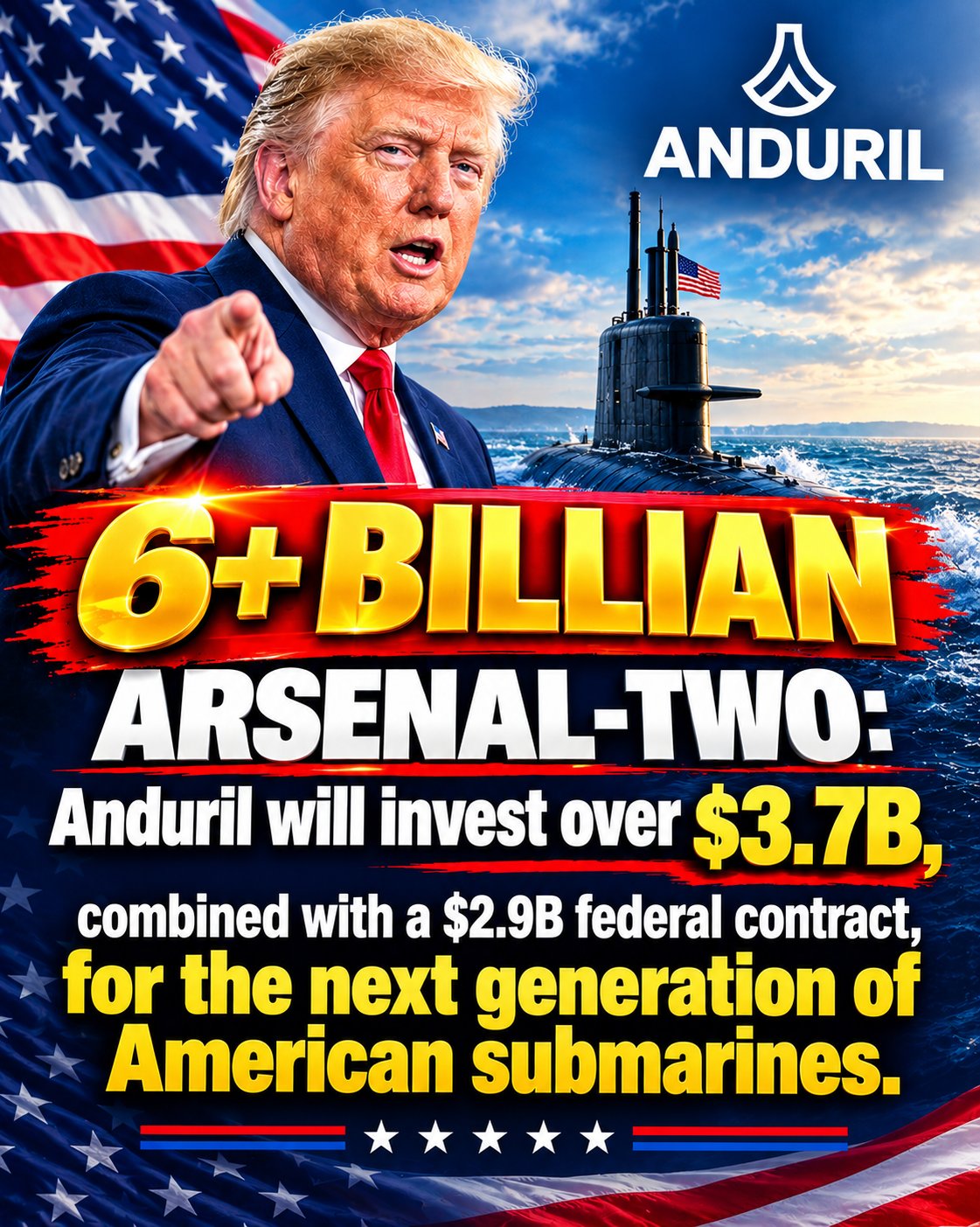
Arsenal-Two: Anduril Industries Launches $6.6 Billion Submarine Program
Anduril Industries is moving aggressively into undersea warfare with a program it calls Arsenal-Two, combining more than $3.7 billion in private company investment with a $2.9 billion federal contract to develop next-generation American submarine capabilities. The total commitment of over $6.6 billion represents one of the largest blended public-private defense investments in recent memory and signals a direct challenge to the traditional model of U.S. naval procurement.
The program marks a significant expansion of Anduril’s ambitions beyond the autonomous air and ground systems it has become known for. Founded in 2017 by Palmer Luckey and a group of national security and technology veterans, the company has positioned itself as an alternative to legacy defense contractors, emphasizing faster development cycles and software-defined hardware platforms. Arsenal-Two would push that philosophy into one of the most technically demanding domains in modern warfare.
Undersea capability has become a focal point of U.S. defense strategy as competition with China’s expanding naval forces intensifies. The Pentagon has identified submarine warfare as a critical gap, and the AUKUS agreement — a trilateral security partnership between the United States, the United Kingdom, and Australia — has placed additional pressure on American shipbuilders to scale production. The U.S. submarine industrial base, centered on a small number of specialized shipyards, has faced persistent capacity constraints, making room for new entrants willing to invest at scale.
Anduril’s decision to commit billions in private capital alongside government funding is unusual in the defense sector, where research and development costs are typically borne almost entirely by federal contracts. The structure suggests the company is betting that Arsenal-Two will generate long-term returns, whether through follow-on production contracts, international sales, or expanded Navy partnerships. It also gives Anduril a degree of independence in how the platform is designed and developed.
The program’s name echoes the concept of an “arsenal ship” — a platform designed to carry and deploy large quantities of munitions or autonomous systems rather than serving as a traditional crewed warship. Whether Arsenal-Two refers to a crewed submarine, an autonomous undersea vehicle, or a hybrid platform has not been confirmed in public disclosures. Anduril has previously developed the Dive-LD underwater drone and has expressed interest in large autonomous undersea vehicles, suggesting the program may emphasize unmanned or optionally manned designs.
Traditional submarine manufacturers, including Huntington Ingalls Industries and General Dynamics’ Electric Boat division, have dominated U.S. undersea shipbuilding for decades. Anduril’s entry into the space is likely to draw scrutiny from both established contractors and lawmakers who oversee the Navy’s shipbuilding budget, as questions arise about industrial capacity, workforce requirements, and how a new program would integrate with existing fleet architecture.
No timeline for initial deliveries or operational testing has been publicly announced. The scale of the investment, however, indicates that Anduril views Arsenal-Two as a foundational program — one intended to shape the future of American undersea power for years to come.