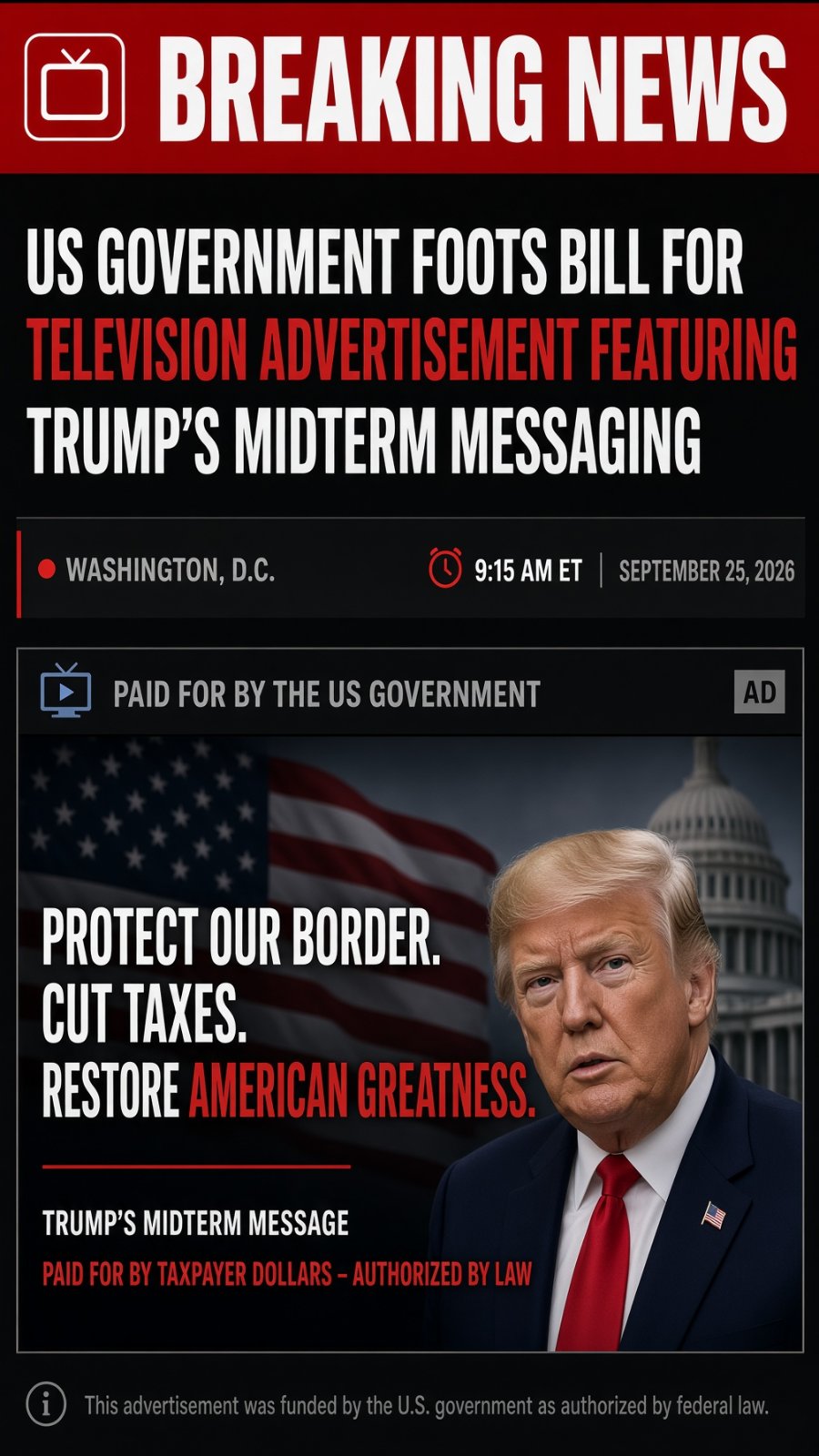
A television advertisement funded by federal government resources featured messaging connected to midterm election strategy, according to reporting on government spending practices.
The advertisement, which aired on television, was paid for using federal funds allocated to a government agency or department. The content of the spot included language and themes associated with a political campaign’s midterm message strategy, raising questions about whether the use of taxpayer money crossed established lines separating government communications from partisan political activity.
Government agencies regularly fund television and media campaigns to communicate with the public about health, safety, civic participation, and other matters within their jurisdiction. However, such campaigns are subject to rules and oversight designed to ensure they serve a genuine public information purpose rather than functioning as political advertising that benefits a particular candidate or party.
The disclosure of this funding arrangement highlights ongoing tensions between government communication operations and the political process. Federal agencies must conduct their public relations and advertising within constraints that prevent the use of government resources to advance specific electoral campaigns or candidates. When messaging contains language or themes tied directly to a candidate’s campaign strategy, questions arise about whether those constraints have been satisfied.
The incident underscores broader concerns about the boundaries between legitimate government communication—such as public health campaigns or civic information—and activity that blurs into political campaigning. Watchdogs and government ethics experts have long flagged the difficulty in drawing these lines clearly, particularly when advertising covers topics with political dimensions or when the tone or framing mirrors campaign messaging.
Details about the agency responsible for the advertisement, the specific content and messaging, the amount spent, and any official response to the disclosure remain important elements of understanding the full scope of the situation. The incident may prompt questions about oversight of government advertising spending and whether current rules are sufficiently clear and enforced.