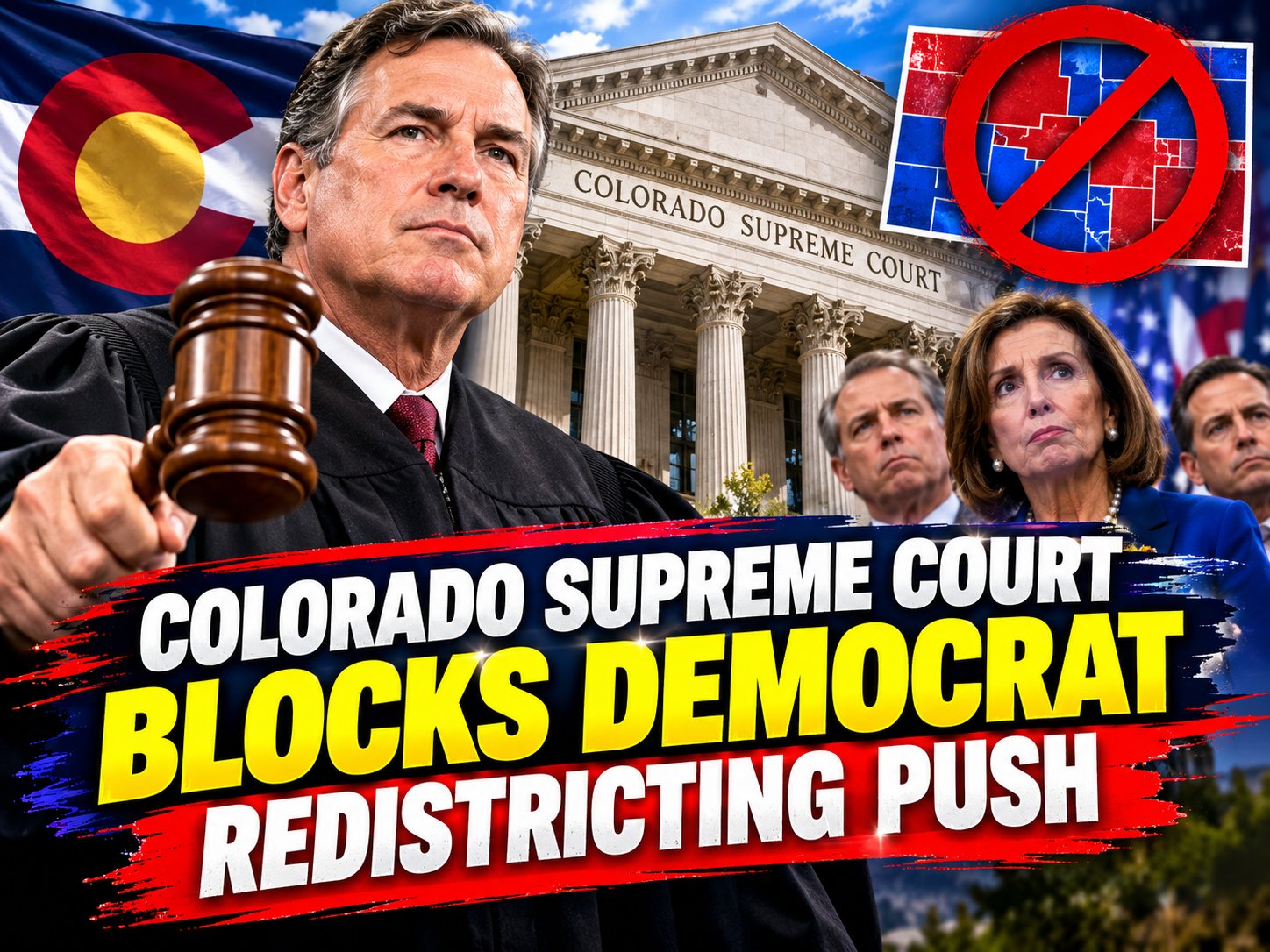
Colorado Supreme Court Blocks Democratic Redistricting Push
The Colorado Supreme Court has moved to block a redistricting effort championed by Democrats in the state, delivering a significant legal setback to efforts aimed at redrawing political district boundaries. The ruling, issued by the state’s highest court, prevents the proposed maps from taking effect while legal questions surrounding the redistricting process are resolved.
The decision adds Colorado to a growing list of states where courts have intervened in politically charged disputes over how legislative or congressional districts are drawn. Redistricting carries enormous consequences for electoral outcomes, determining which communities are grouped together and, in many cases, which party holds an advantage in a given seat for the better part of a decade.
Colorado has operated under voter-approved independent redistricting commissions since 2020, a system established by ballot measure to insulate the map-drawing process from direct partisan control. Critics of the Democratic effort argued that the push to alter district lines ran afoul of those voter-approved guardrails, while supporters maintained the changes were legally grounded and necessary to produce fair representation.
The court’s ruling puts the proposed redistricting plan on hold, and its reasoning is expected to shape how any future map-drawing attempts proceed. Courts reviewing redistricting efforts typically examine whether proposed maps comply with constitutional equal-protection requirements, comply with the Voting Rights Act, and adhere to state-specific procedural rules.
Republican lawmakers and conservative groups had pushed back against the Democratic-backed effort, arguing it amounted to partisan manipulation of the process. Democratic proponents countered that the new maps were a legitimate exercise aimed at correcting existing imbalances in representation.
The ruling’s immediate practical effect is to preserve existing district boundaries while the legal dispute continues. Election administrators, candidates considering their options in affected districts, and state party organizations will all need to weigh how the decision affects their planning for upcoming election cycles.
Legal analysts note that the Colorado Supreme Court has historically taken seriously its role in policing the redistricting process, and that rulings of this kind can set lasting precedents for how political boundaries are drawn in the state. Whether Democrats will seek to challenge the ruling further or pursue an alternative legislative or legal strategy remains to be seen.
The case underscores the tension between political ambition and institutional constraints in a state that has worked deliberately to reform how its district maps are created. Colorado voters’ decision to establish independent commissions reflected a broader national appetite for reducing partisan influence over redistricting — an appetite the court’s ruling appears to reinforce.