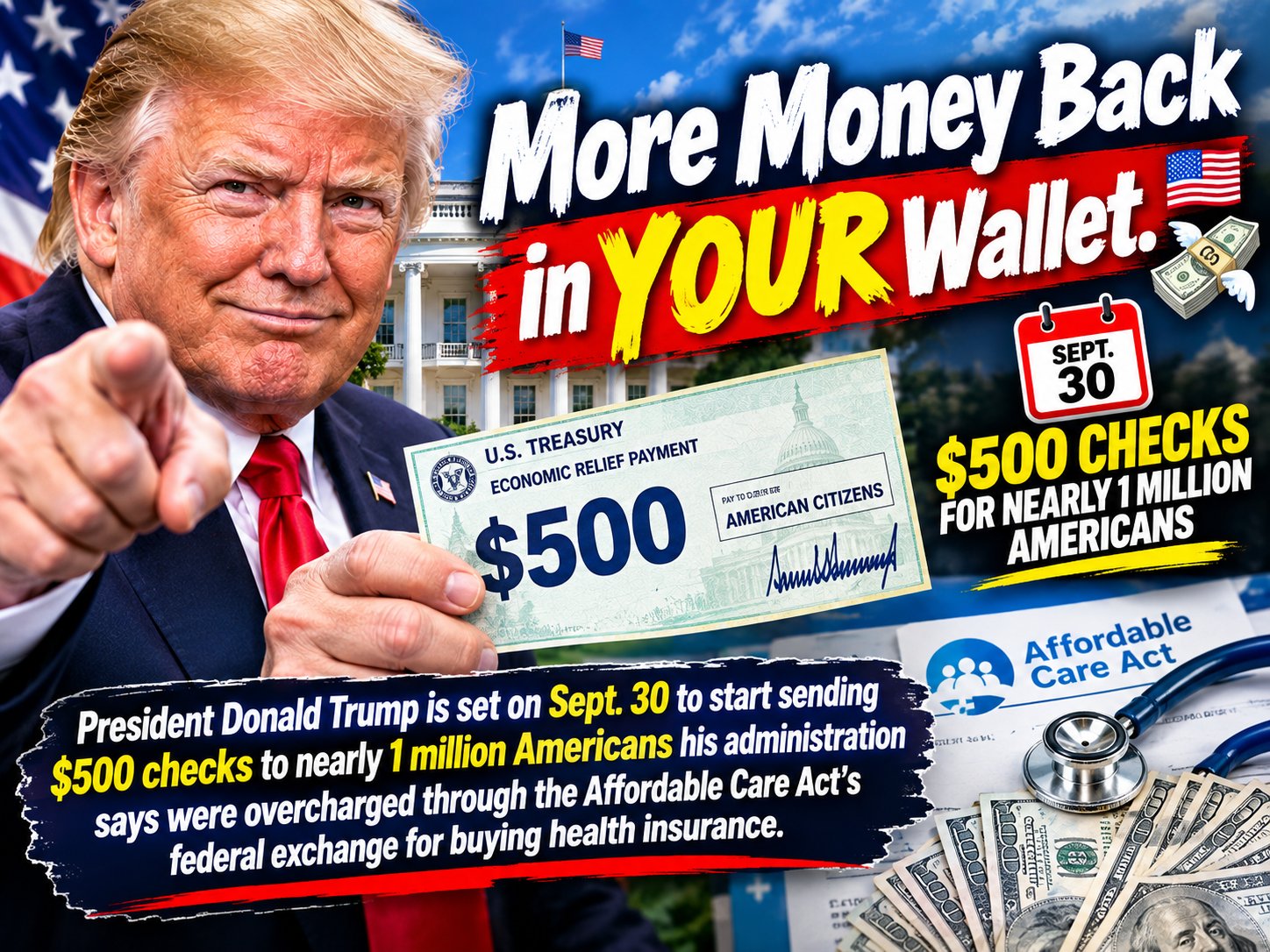
Trump Administration Plans $500 Checks for Nearly 1 Million Americans Over ACA Overcharges
The Trump administration has announced it will begin distributing $500 checks to approximately one million Americans starting September 30, citing evidence that those individuals were overcharged when purchasing health insurance through the federal Affordable Care Act marketplace.
The White House described the payments as a corrective measure, saying that consumers who bought coverage through the federal exchange paid more than they should have. Administration officials framed the effort as returning money directly to American households.
The federal ACA exchange, operated through HealthCare.gov, allows individuals and families in participating states to shop for private health insurance, often with help from income-based premium subsidies. The subsidies, structured as tax credits, are designed to lower monthly premium costs for eligible enrollees. When the credits are miscalculated — due to income reporting differences, administrative errors, or other factors — consumers can end up paying either more or less than the correct amount.
The administration has not publicly detailed the precise mechanism behind the alleged overcharges, and independent healthcare policy analysts are likely to scrutinize both the methodology used to identify affected consumers and the legal authority under which the payments are being issued.
At $500 per recipient and with nearly one million people reportedly affected, the total outlay would approach half a billion dollars. It remains unclear whether those funds come from a specific appropriation, an existing program reserve, or another federal source.
Consumer advocates and healthcare policy researchers are expected to raise questions about how eligible recipients were identified, whether all overcharged consumers are captured in the list, and what steps, if any, affected individuals need to take to receive their payment.
The announcement carries notable political weight. The Trump administration has long been a critic of the Affordable Care Act and has pursued various efforts to modify or limit the law. Issuing refunds to ACA marketplace enrollees marks an unusual moment in that history, and observers across the political spectrum are weighing whether the move reflects a genuine policy correction or a broader communications strategy ahead of the end of the fiscal year.
For the Americans set to receive checks, the practical impact is straightforward: a direct payment intended to offset what the government says were excess charges for health coverage. Recipients are advised to watch for official communication from federal agencies explaining the basis of their payment and any relevant tax implications.
The September 30 start date coincides with the close of the federal fiscal year, a deadline that sometimes drives the pace of government spending and program activity.