A Secure Border, Safe Communities, American Prosperity: Officials Outline Vision for the Nation’s Future
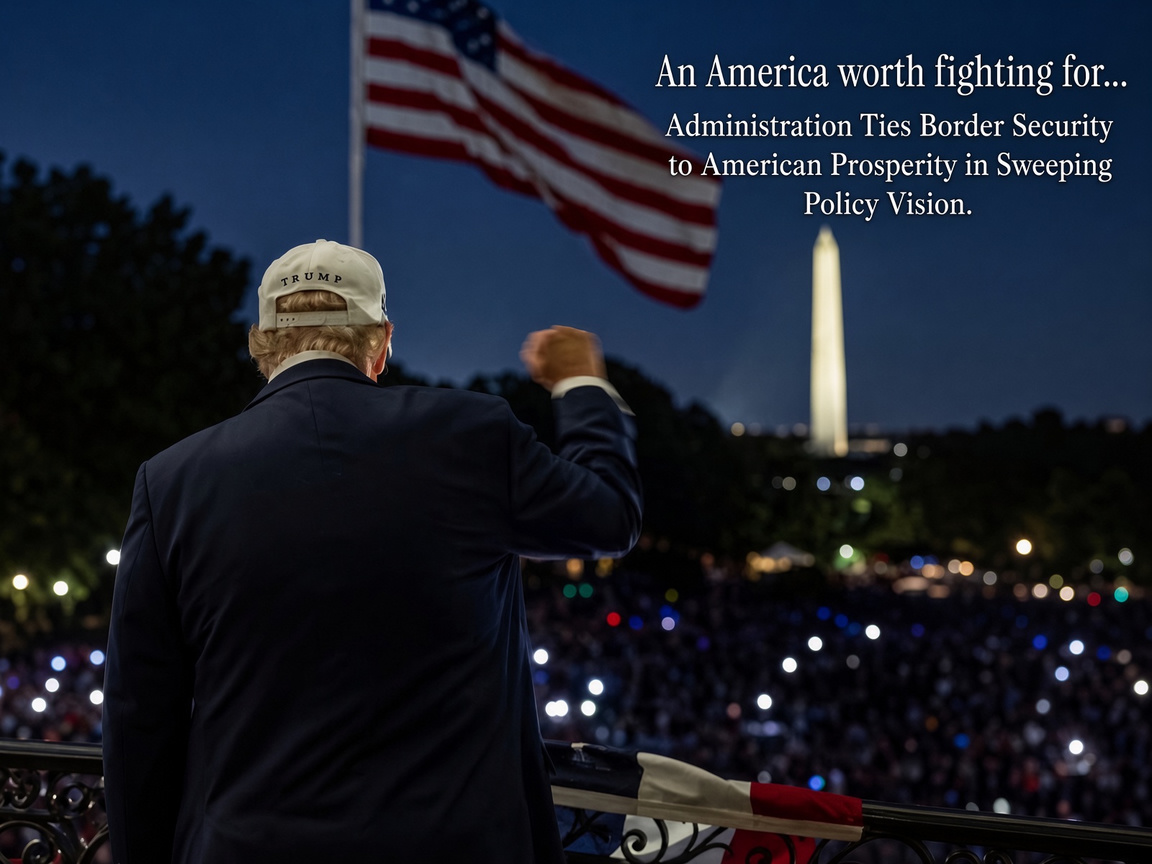
A sweeping policy vision linking border security, public safety, and economic opportunity has emerged from federal officials, framing these priorities as mutually dependent pillars of a stronger America. The message — emphasizing that national security and domestic prosperity are inseparable — reflects a governing philosophy that has moved steadily to the center of U.S. policy debates in recent years.
At its core, the argument is straightforward: that a nation unable to control who crosses its borders cannot fully protect its communities or guarantee economic opportunity for its citizens. Proponents contend that robust immigration enforcement reduces pressure on wages for lower-income workers, limits strain on public services, and allows law enforcement to focus resources on domestic crime rather than migration management.
Border security has remained one of the most contested fronts in American politics. After years of record-high migrant encounters along the southern border, public pressure on both parties to deliver concrete results has intensified. Federal agencies responsible for border management have faced criticism from multiple directions — from those who argue enforcement has been too lax, and from humanitarian advocates who say it has been too harsh.
The public safety dimension of this vision draws a direct line between immigration policy and conditions in American neighborhoods. Officials have pointed to cases involving individuals who entered the country unlawfully and later committed crimes as evidence that border enforcement is a community safety issue, not merely an abstract national security concern. Critics of this framing, including a number of criminologists and local law enforcement leaders, argue that research does not support the claim that immigration — including undocumented immigration — drives higher crime rates overall.
The economic component of the argument centers on working-class Americans, particularly those in industries where labor competition is most direct. The vision’s proponents argue that limiting illegal immigration protects jobs and wages for American citizens, while opponents counter that many industries depend on immigrant labor to function and that restricting it would raise costs for consumers and slow economic growth.
Politically, this combination of border security, safety, and prosperity messaging has proven durable and broadly appealing in polling, even when specific policies attached to it remain divisive. The framing places the focus squarely on outcomes for American families rather than on the mechanics of immigration law, a shift that tends to resonate with voters who feel economic anxiety or concern about crime regardless of their views on immigration itself.
As the debate continues, the central question is whether the policies attached to this vision can deliver measurable results — and how the costs and benefits will be distributed across American communities.